Average human internal (core) body temperature is , with slight variations between day and night. The average surface temperature of the Earth in the 20th century was . It has now risen to .
Question rangeD4.3.1—Anthropogenic causes
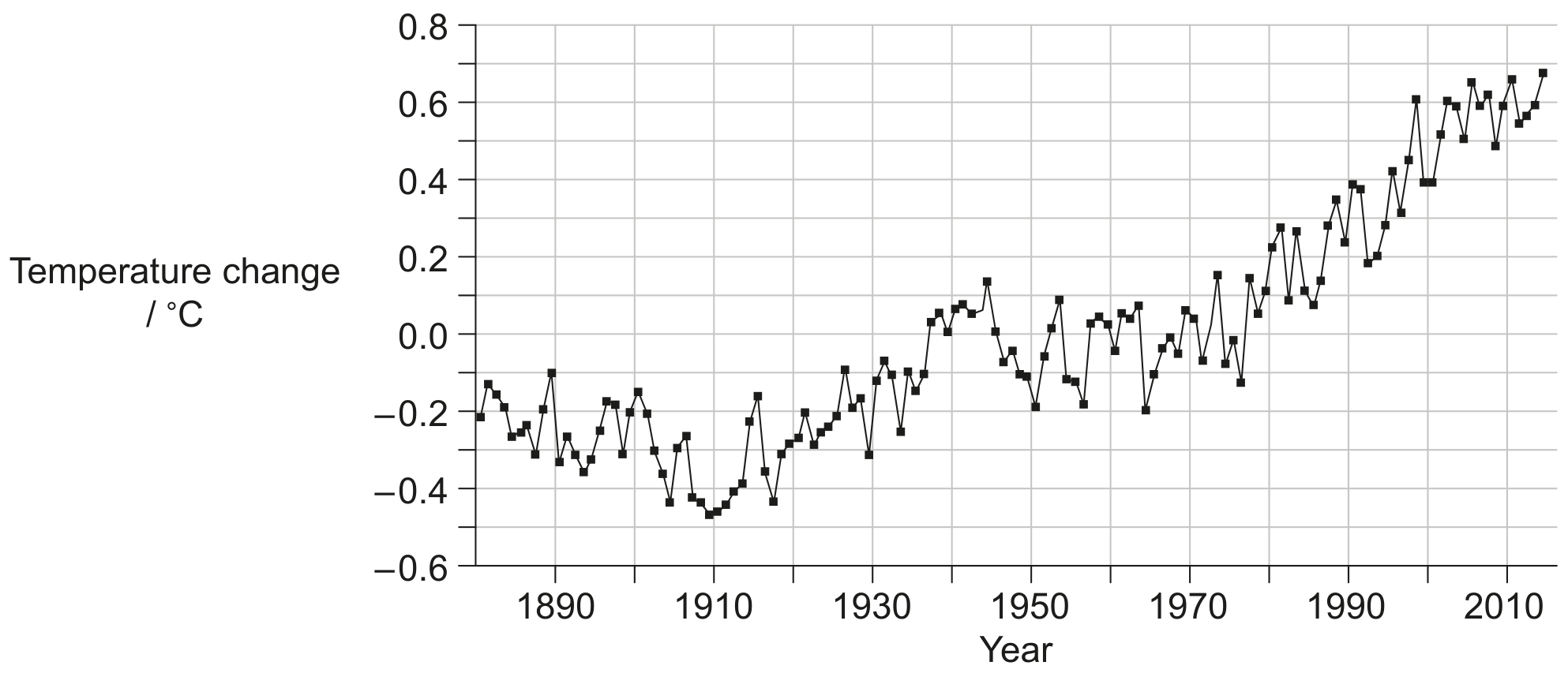
The graph shows the mean annual changes in global temperatures between 1880 and 2014. The mean temperature from 1951 to 1980 was used as the value of zero change in temperature.
[Maximum number: 1]
Which gas is the main contributor to the greenhouse effect?
A
Ozone
B
Methane
C
Nitrogen oxide
D
Water vapour
[Maximum number: 1]
The table shows features of greenhouse gases in the atmosphere.
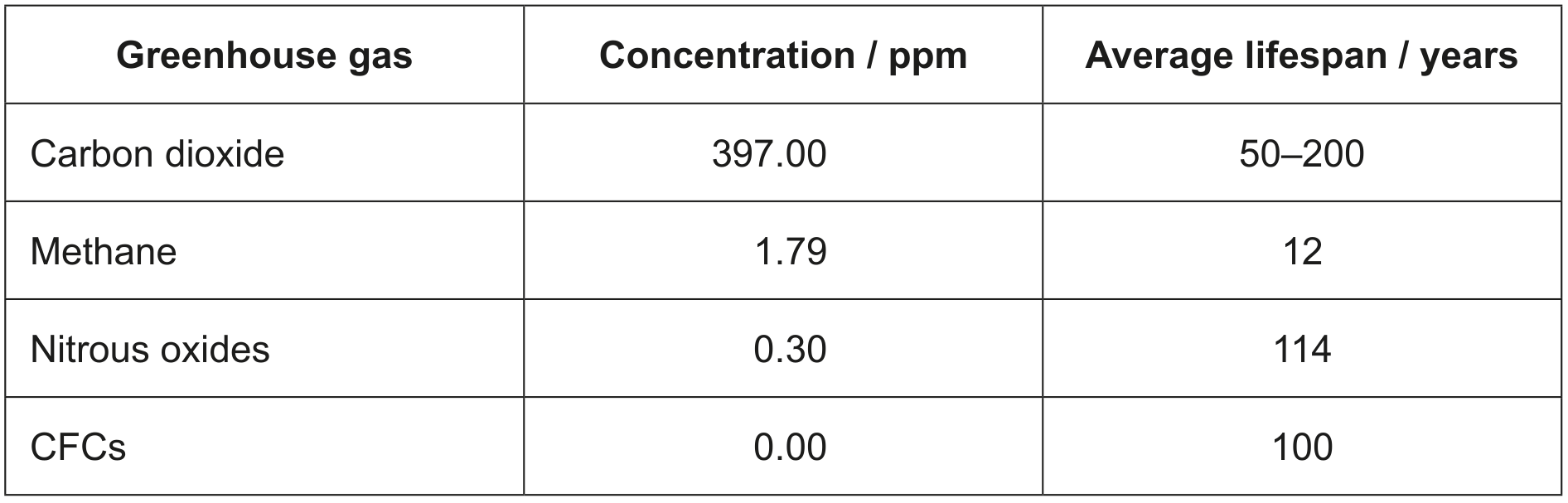
According to the data in the table, which greenhouse gas contributes the most to climate change?
A
Carbon dioxide because it is the most abundant greenhouse gas
B
Methane because it has the shortest lifespan
C
Nitrous oxides because they absorb the greatest amount of shortwave radiation
D
CFCs because they destroy the ozone layer
[Maximum number: 1]
How do greenhouse gases contribute to global warming?
A
They destroy the ozone layer, allowing radiation to reach the Earth's surface.
B
They prevent radiation from the Earth escaping into space.
C
They trap short wavelength radiation in the atmosphere.
D
They are a product of combustion, which generates heat.
[Maximum number: 1]
What contributes to rising atmospheric concentrations of carbon dioxide and increases in average global temperature?
A
An increase in the shorter wavelength radiation emitted by Earth
B
An increase in longer wavelength radiation emitted by Earth
C
An increase in the combustion of fossilized organic matter
D
The depletion of ozone in the stratosphere
[Maximum number: 6]
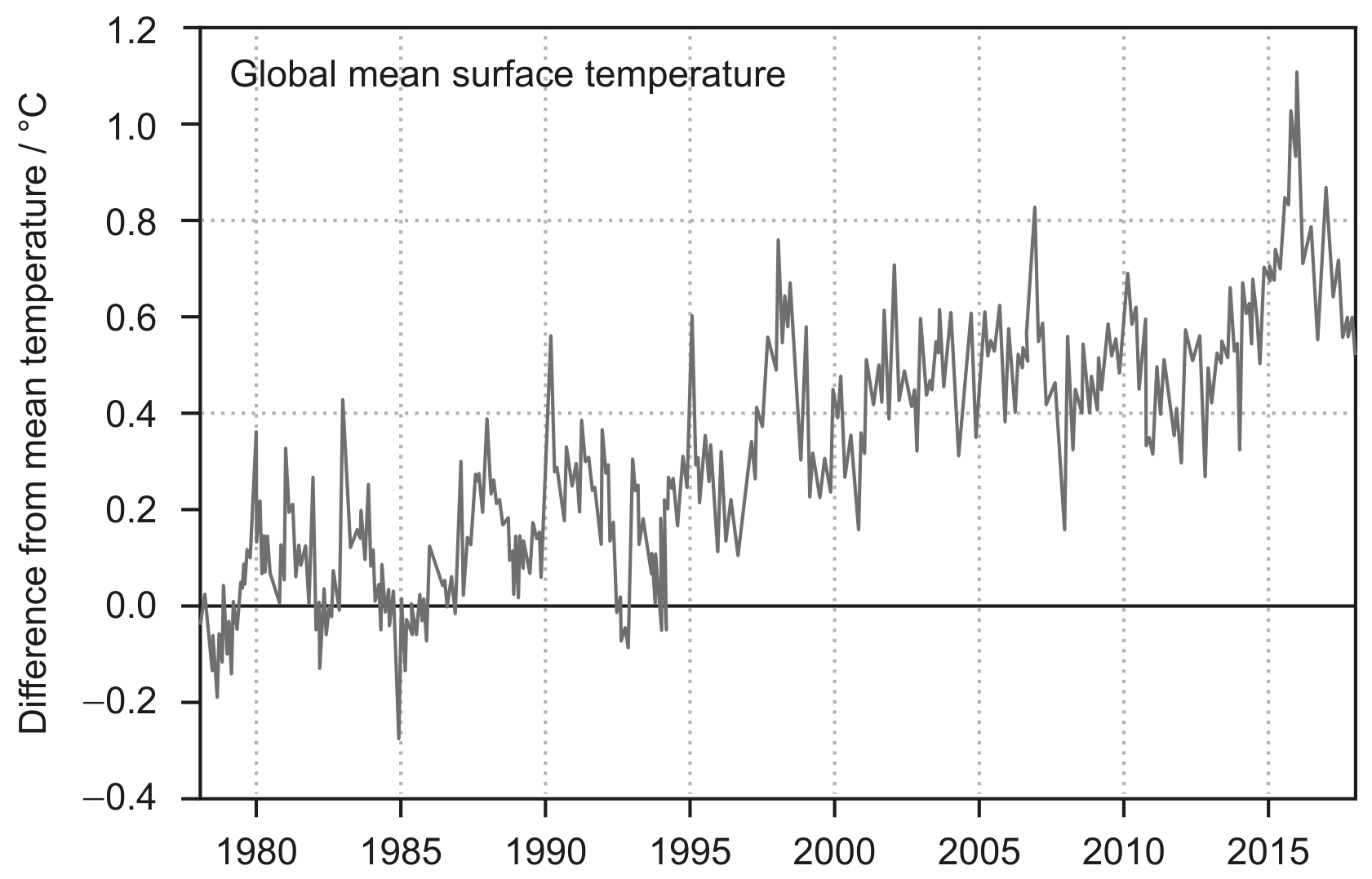
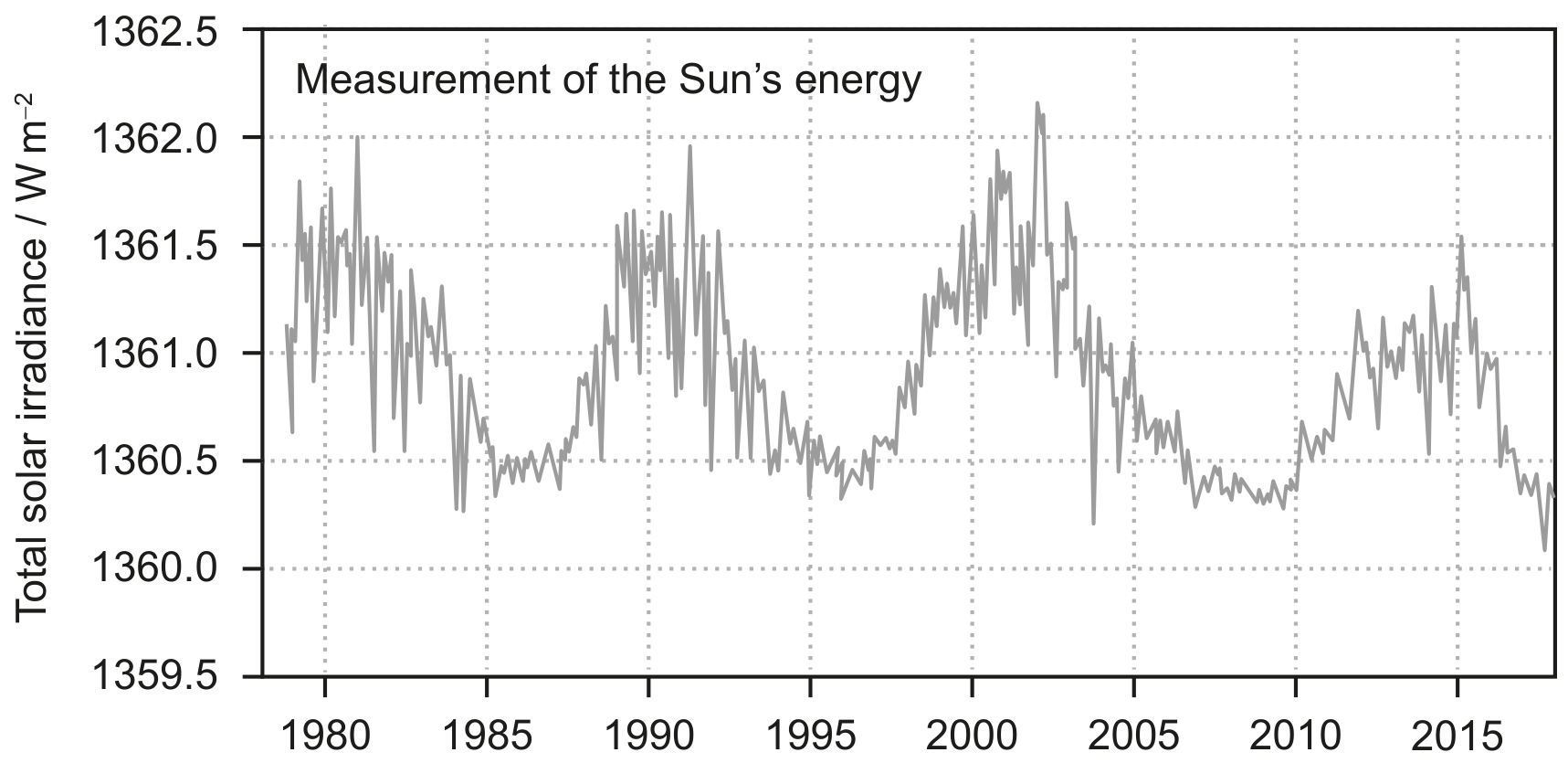
The graphs show how the global mean surface temperature changed from 1978 to 2018 , as well as the amount of energy reaching the surface of the Earth from the Sun.