EduNinja
Question rangeD3.3.4—Diabetes
[Maximum number: 13]

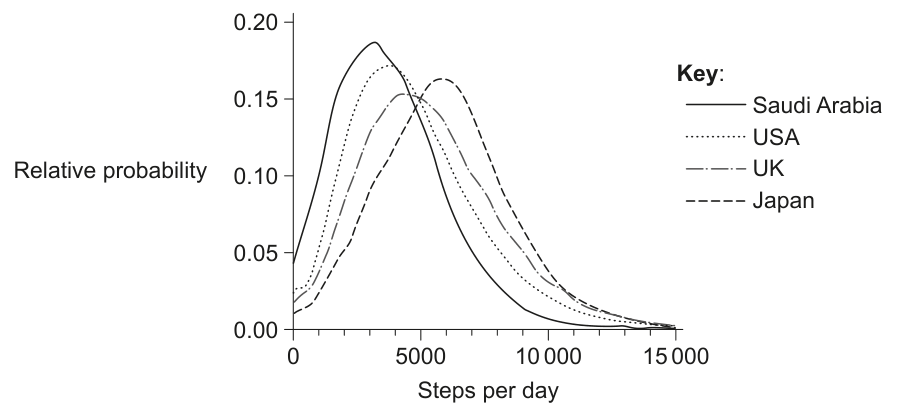
Smartphone data from more than 700000 individuals in 111 countries was used to estimate their activity levels. Data from more than 68 million days of activity was analysed, including the numbers of steps taken per day. The graph shows the distribution of numbers of steps per day for four countries.

Question image
[Maximum number: 18]

Type I diabetes is a leading cause of death in advanced countries and is associated with various severe or fatal complications, including blindness, kidney failure, heart disease, stroke, neuropathy, and amputations. Embryonic stem cells are considered to be a powerful tool in the treatment of diabetes.

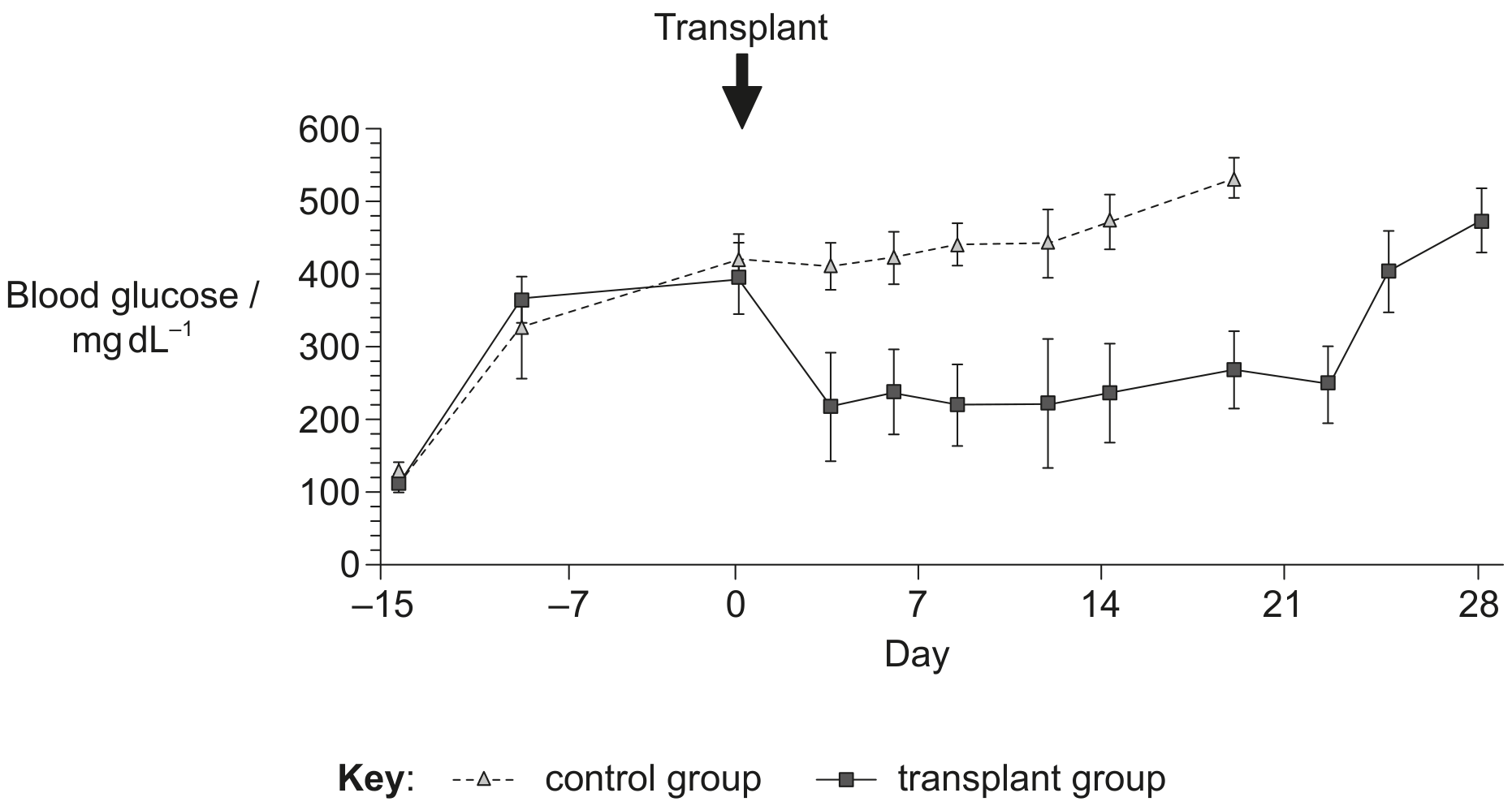
In a study, embryonic stem cells were grown in culture and tested for insulin mRNA. A drug was injected into two groups of healthy mice in order to simulate type I diabetes 15 days prior to the transplant of embryonic stem cells. The mice in the transplant group received embryonic stem cells that produce insulin mRNA. The control group did not receive the transplant. The graph shows the blood glucose concentration in both groups.

Question image
[Maximum number: 6]

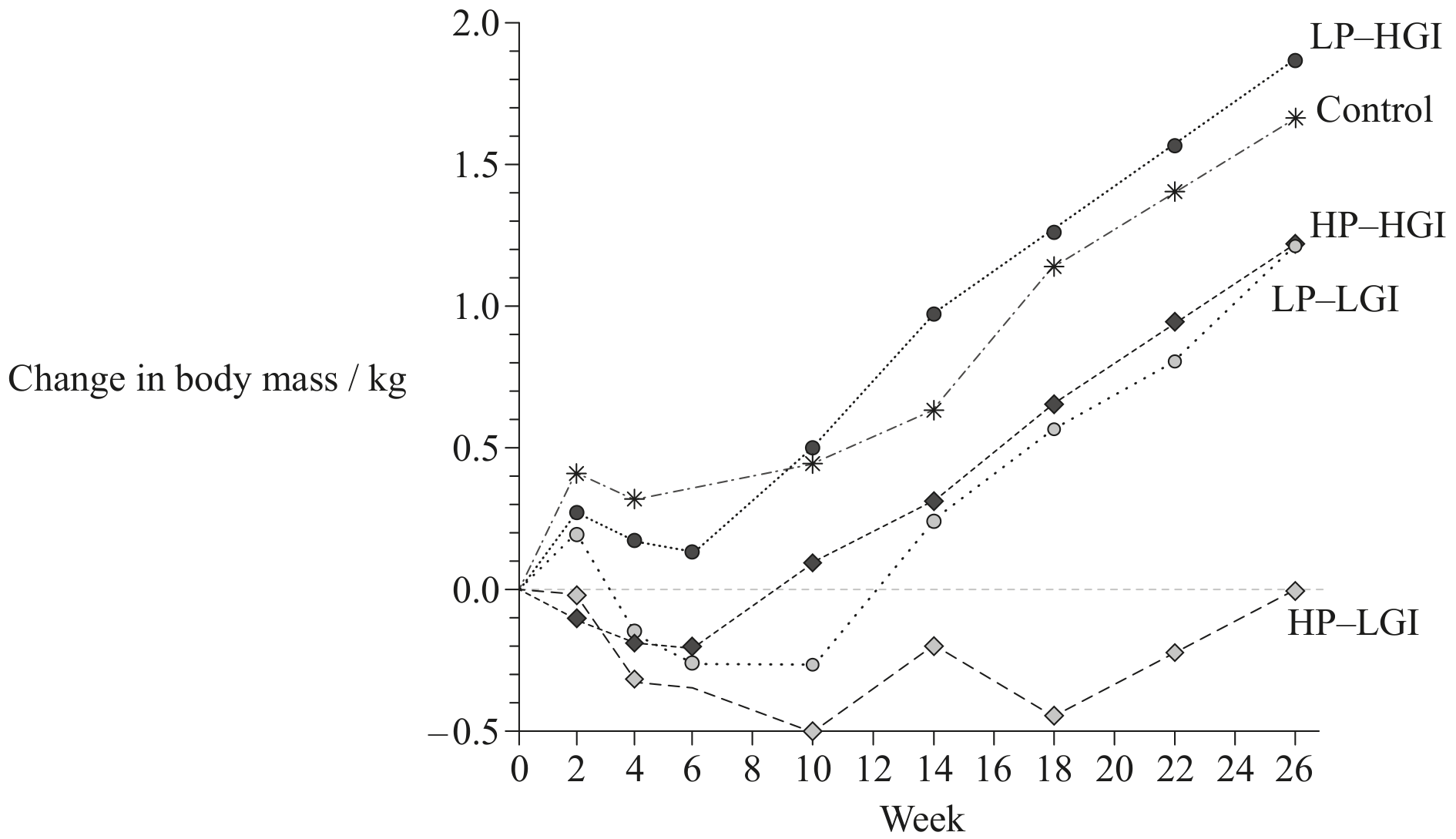
During an investigation, 773 participants who had lost body mass through a low-energy diet were randomly assigned a diet (with no energy restriction) for the next 26 weeks to maintain their mass. These maintenance diets were one of the four combinations of high or low protein with either high or low glycemic index. A control group followed the recommended daily intake. High glycemic index foods enable a quicker release of glucose into the bloodstream than foods with a low glycemic index.

Question image

Key: HP - high protein HGI - high glycemic index
LP - low protein LGI - low glycemic index

[Maximum number: 15]

Obesity (excessive weight) is recognized as a global health problem and has been correlated with a large number of health issues, diseases and deaths. The increased consumption of fructose, now widely used as a sweetener, has been associated with the increase in obesity.

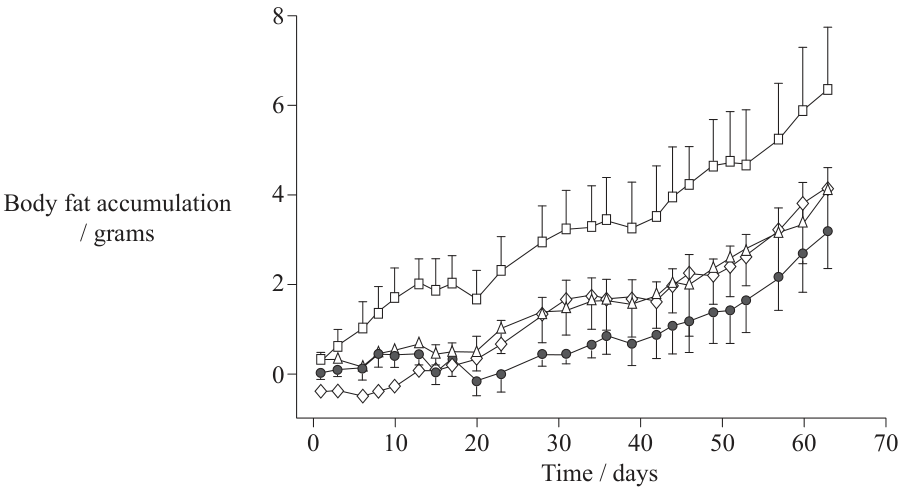
In a study, mice were divided into four groups. Each group was given the same amount of food and either a soft drink with a different sweetener or water.

Question image
[Maximum number: 15]

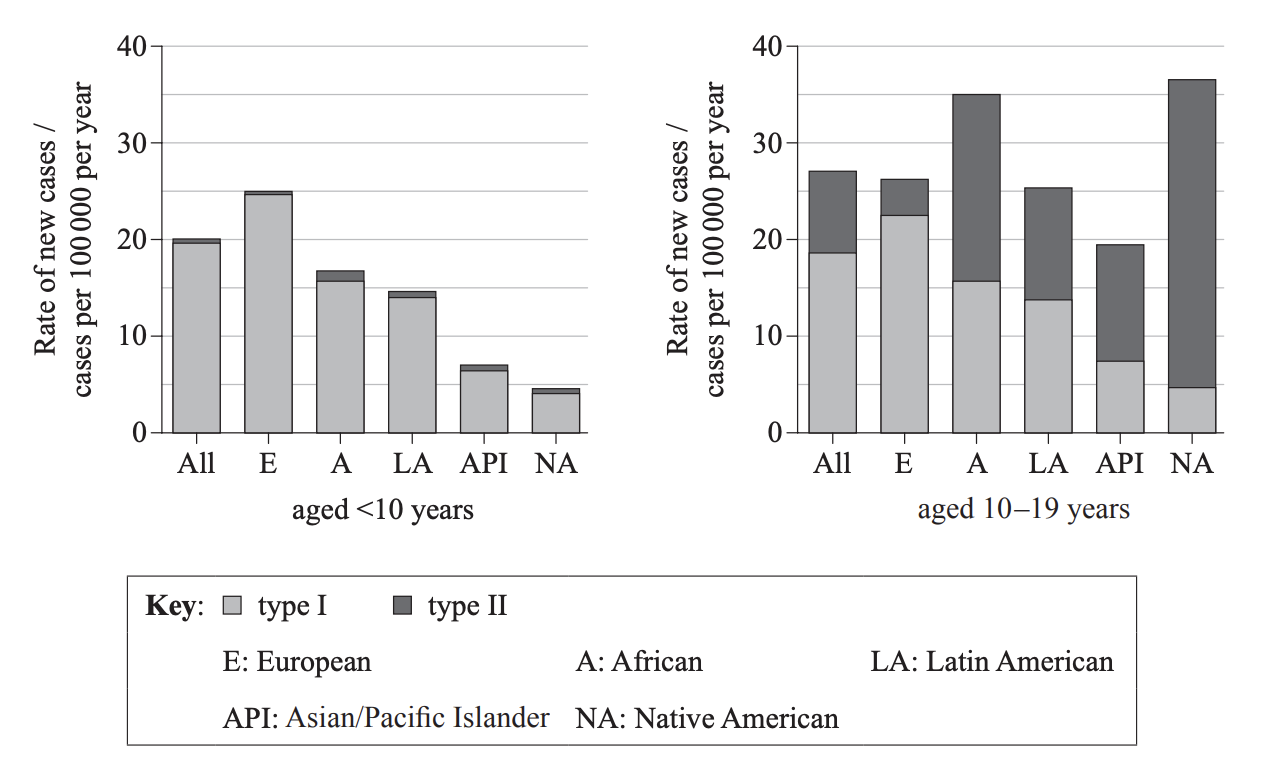
Diabetes in Youth is a study that examined diabetes (type I and type II) among children and adolescents in the United States. The graphs show the rate per year of new cases of type I and type II diabetes among young people (aged less than 20 years) by ethnicity between 2002-2005.

Question image
[Maximum number: 14]

Obesity (excessive weight) is recognized as a global health problem and has been correlated with a large number of health issues, diseases and deaths. The increased consumption of fructose, now widely used as a sweetener, has been associated with the increase in obesity.

In a study, mice were divided into four groups. Each group was given the same amount of food and either a soft drink with a different sweetener or water.

Question image
Table
[Maximum number: 11]

Skeletal muscle fibres normally respond to insulin by absorbing glucose. Failure of skeletal muscle to respond to insulin is a major factor in the development of type II diabetes.

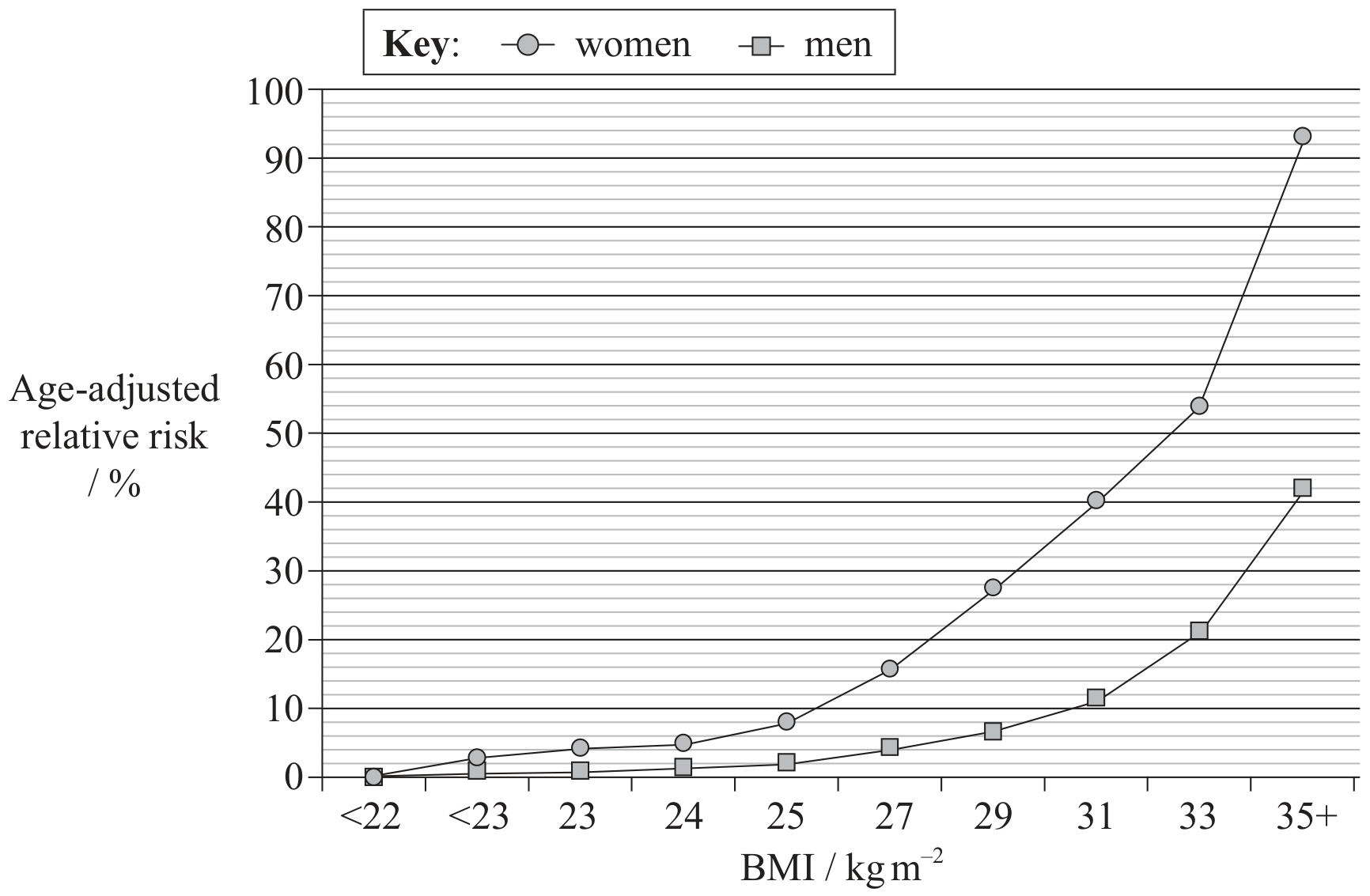
A1. Body mass index (BMI) is an important indicator of health. The relationship between a high BMI and percentage risk of developing type II diabetes was studied and the following data presented.

Question image
[Maximum number: 1]

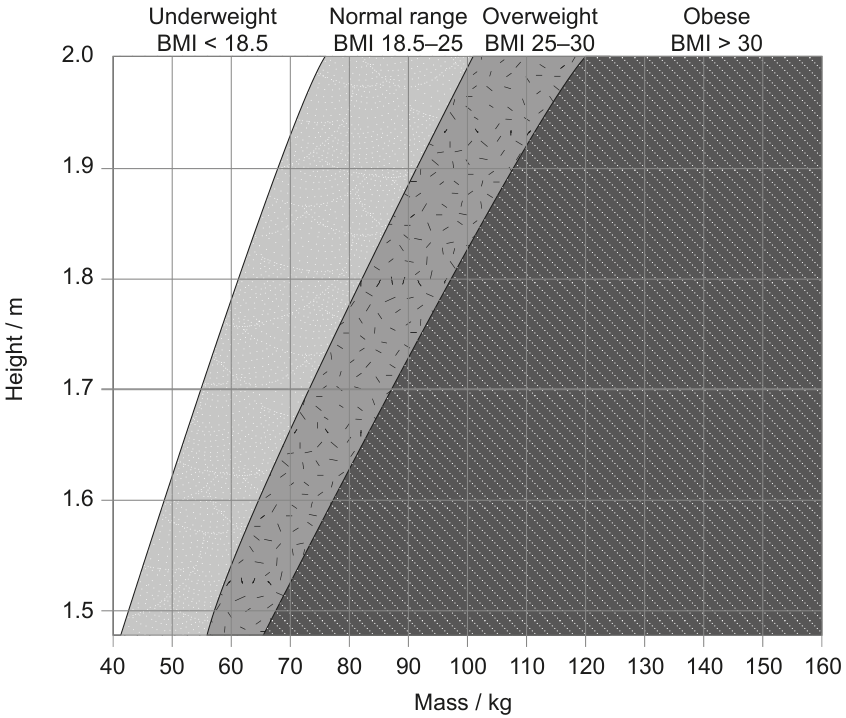
The chart classifies individuals according to their height and mass.

Question image

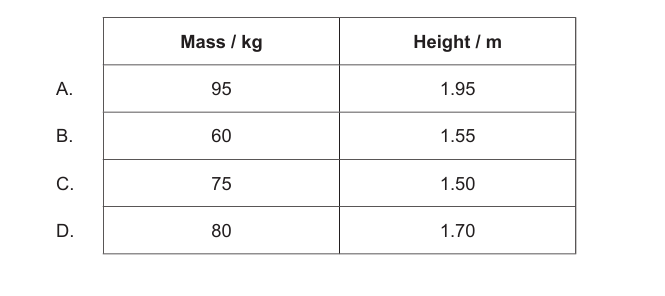
Based on the information provided, which individual is most at risk of diseases associated with the accumulation of excessive body fat?

Question image
[Maximum number: 2]

(a) Outline the symptoms of type II diabetes.

0