
In a strain of soybeans, high oil content (H) in seeds is dominant to low oil content (h) and four seeds in a pod (F) is dominant to two seeds in a pod (f). A farmer crosses two soybean plants, both with high oil content and four seeds in a pod. The offspring have a phenotypic ratio of 9: 3: 3: 1.
Question rangeD2.1.10—Down syndrome
[Maximum number: 1]
What term describes the failure of sister chromatids to separate during anaphase II?
A
Sex linkage
B
Karyotyping
C
Non-disjunction
D
Semi-conservative replication
[Maximum number: 1]
Testing the chromosomes of a girl with Turner syndrome produced the following karyogram.
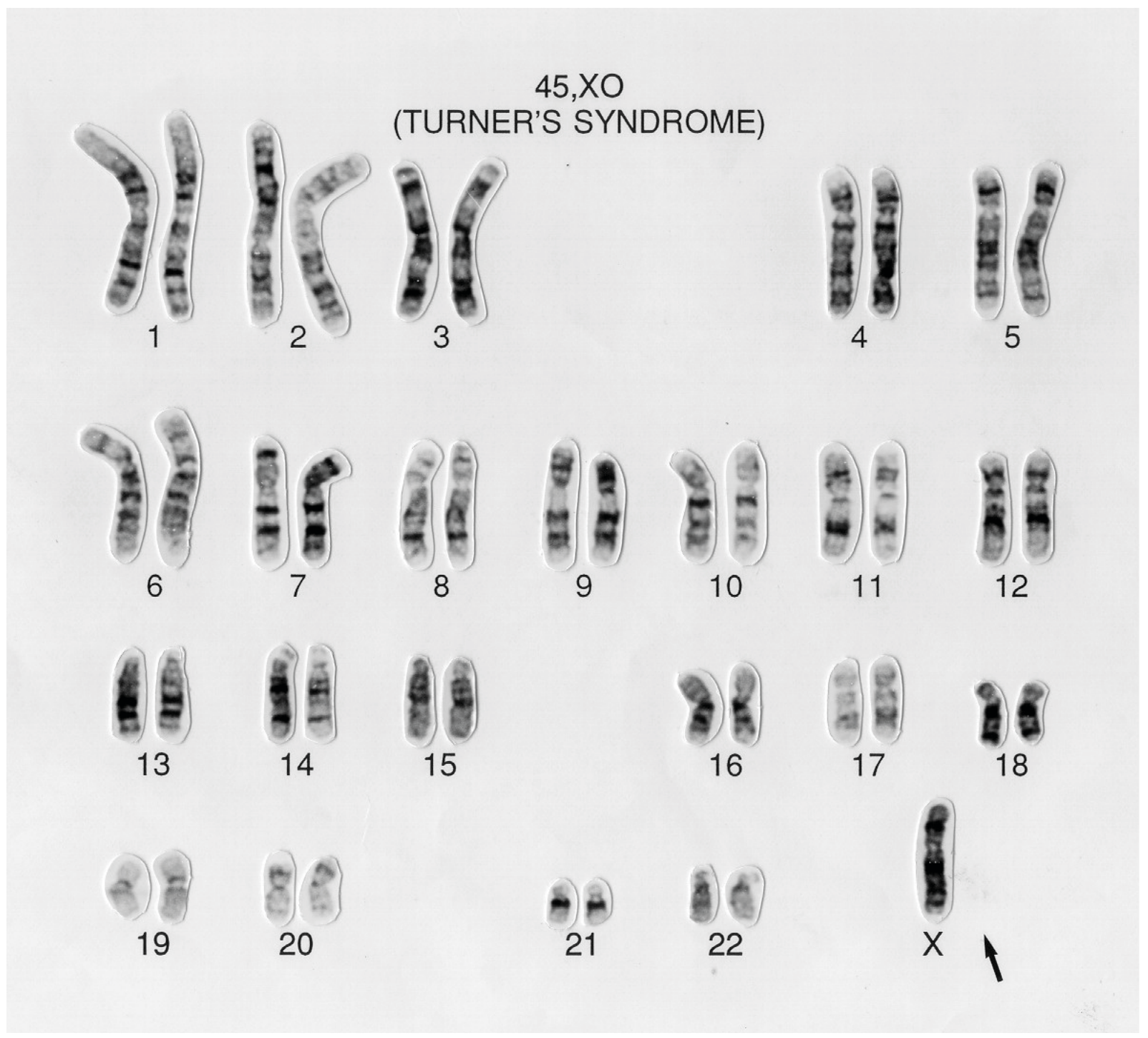
The condition can result from non-disjunction occurring in anaphase I of meiosis in an egg cell. Two cells result from the first division, one of which would lead to Turner syndrome. Which chromosomes will be in the other cell (polar body) at the end of meiosis I?
A
44 autosomes and X
B
44 autosomes and XX
C
22 autosomes and X
D
22 autosomes and XX
[Maximum number: 1]
The graph shows the incidence of trisomy resulting from non-disjunction in pregnancies at different maternal ages.
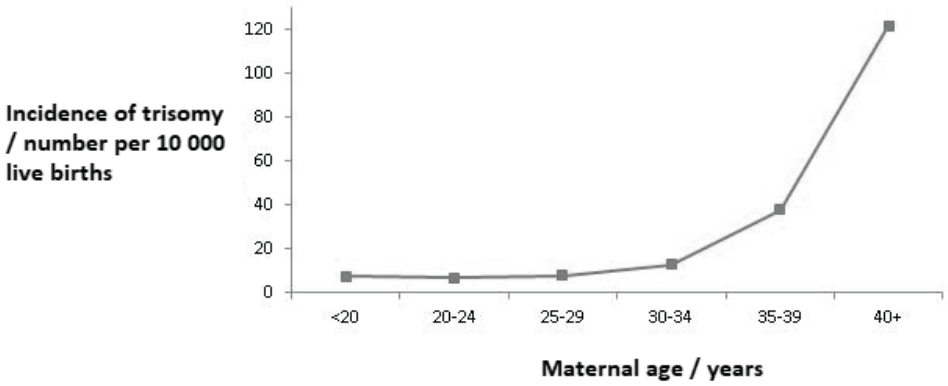
What can be inferred from the graph?
A
The incidence of three copies of a chromosome increases directly in proportion with the age of the mother.
B
The incidence of three sets of chromosomes increases from age 20.
C
The incidence of three copies of a chromosome increases the most from age 35.
D
The incidence of three sets of chromosomes increases the most from age 30.
[Maximum number: 1]
The karyogram belongs to a child with Edward's syndrome, a chromosome abnormality due to an error during the formation of gametes in one parent.
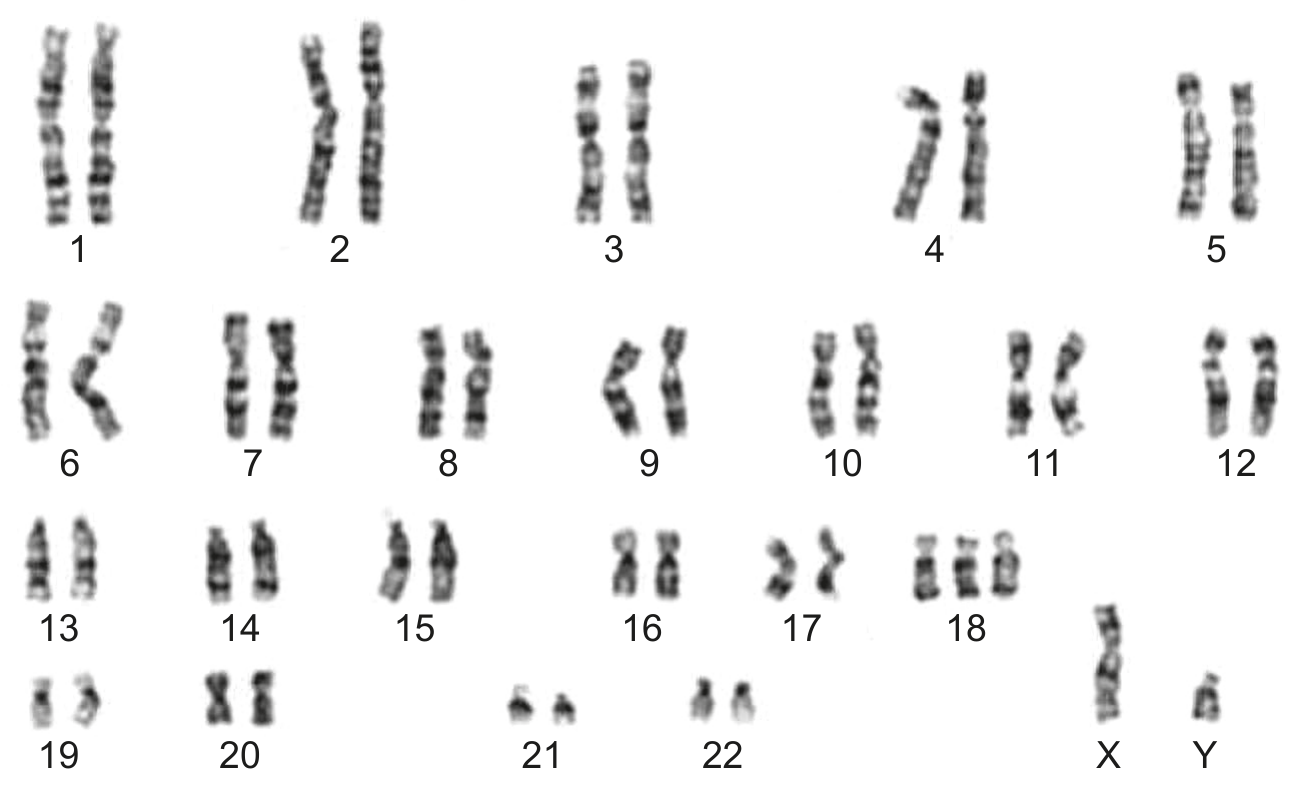
What explains this chromosome abnormality in the child?
A
Homologous chromosomes fail to separate completely during meiosis I.
B
An extra chromosome has replicated during anaphase.
C
Non-disjunction of sister chromatids may occur during meiosis I.
D
Pairs of chromosomes move to the same pole during anaphase II.
[Maximum number: 1]
There is no evidence that rates of non-disjunction in meiosis increase as the age of the father increases from 30 to 45, yet the frequency of Down syndrome in offspring increases. What could explain this?
A
Down syndrome is not caused by non-disjunction.
B
Meiosis rates decrease in males between the ages of 30 and 45 .
C
Down syndrome is sex-linked, so non-disjunction can only take place in the mother.
D
Rates of non-disjunction increase as the age of the mother increases, and parents of a child tend to be similar in age.
[Maximum number: 1]
When could non-disjunction occur?
A
Prophase
B
Meiosis
C
Interphase
D
Cytokinesis
[Maximum number: 1]
What is the chromosome number in a human gamete with non-disjunction?
A
46
B
45
C
24
D
23
The following sequence of pictures, made using an electronic imaging technique, shows a cell undergoing division.
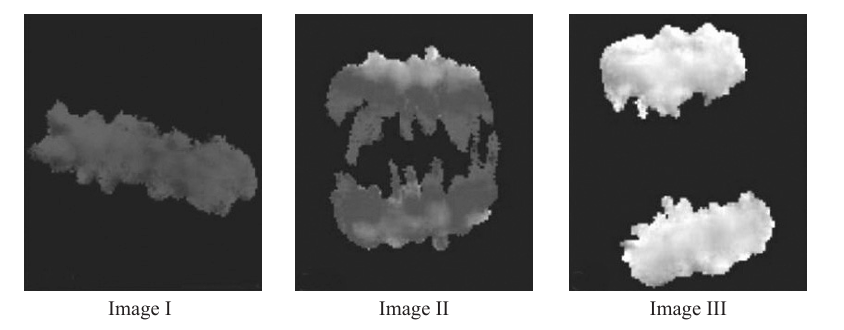
Image I
[Maximum number: 1]
Which of the following statements relate(s) to Down syndrome (trisomy 21)?
I. It can be detected in chorionic villus samples.
II. It results from non-disjunction in meiosis.
III. It is caused by gene mutation.
A
I and II only
B
I and III only
C
II only
D
III only