
Type I diabetes is a leading cause of death in advanced countries and is associated with various severe or fatal complications, including blindness, kidney failure, heart disease, stroke, neuropathy, and amputations. Embryonic stem cells are considered to be a powerful tool in the treatment of diabetes.
In a study, embryonic stem cells were grown in culture and tested for insulin mRNA. A drug was injected into two groups of healthy mice in order to simulate type I diabetes 15 days prior to the transplant of embryonic stem cells. The mice in the transplant group received embryonic stem cells that produce insulin mRNA. The control group did not receive the transplant. The graph shows the blood glucose concentration in both groups.
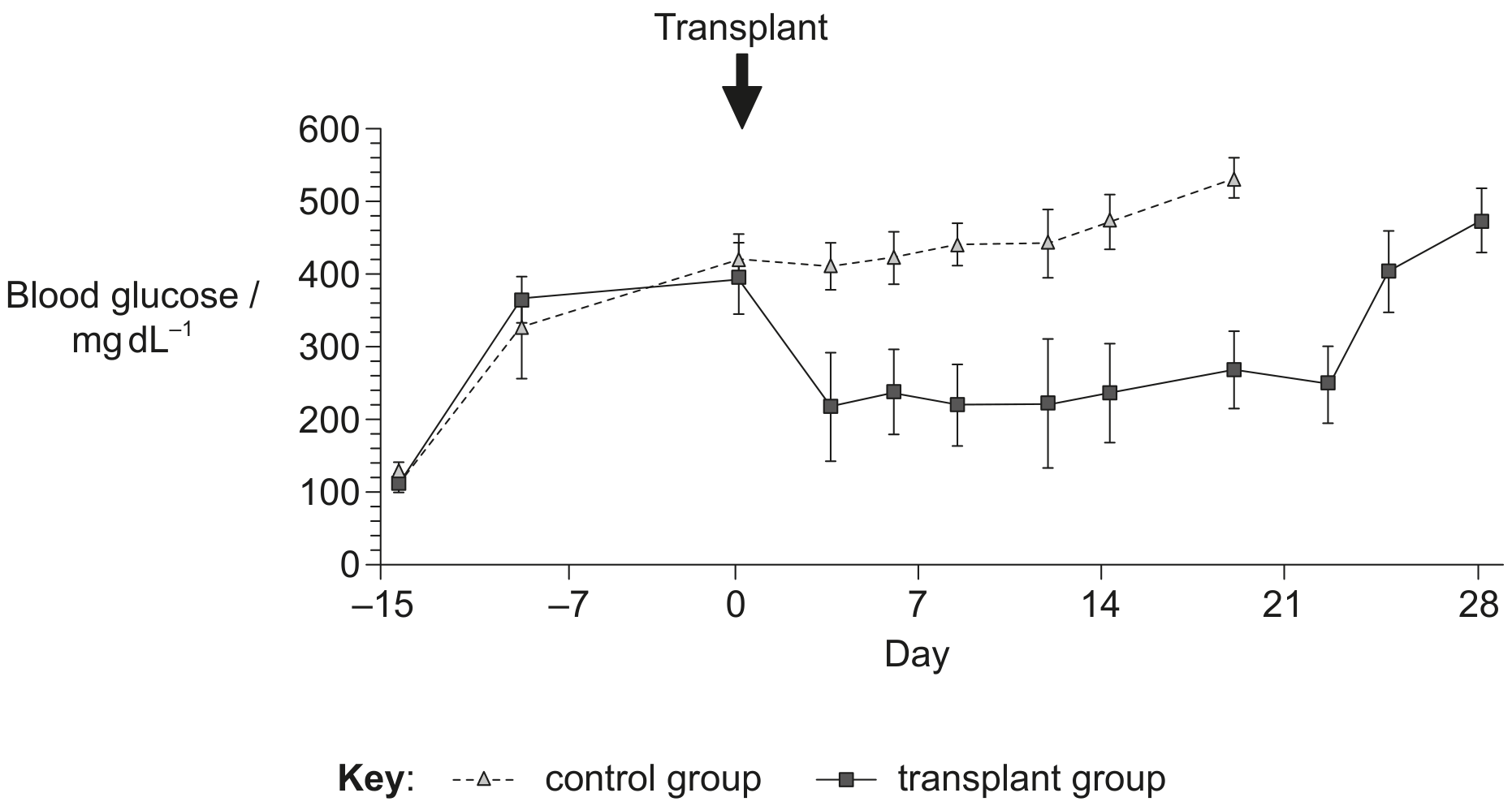
State the highest mean concentration of blood glucose in the mice with transplants.
mgdL-1
Outline the cause of type I diabetes in humans.
Describe the reason for testing for insulin mRNA in the embryonic stem cell cultures.
Compare and contrast the concentration of blood glucose resulting from the embryonic stem cell transplant with the control.
Evaluate the effectiveness of the embryonic stem cell treatment in controlling blood glucose.
In a second study, a group of patients recently diagnosed with type I diabetes received a transplant of stem cells. Based on their need for insulin after the transplant, participants were divided into two groups. Their C-peptide production levels were measured for 24 months as the levels indicate the degree of pancreatic beta-cell function. Group 1 did not require insulin and group 2 required insulin occasionally during the study. The graphs show the levels of C-peptides in each individual of both groups 1 and 2.
Graphs removed for copyright reasons
State the highest rate of production of C-peptides after 24 months in group 2.
Insulin is produced by cutting C -peptide from the precursor molecule proinsulin. Suggest why group 1 has a greater level of C-peptide than group 2.
A few years later, a third study used a treatment with umbilical cord stem cells on patients who had suffered from moderate or severe type I diabetes for an average of 8 years. They were divided into two groups: group 1 had moderate diabetes and group 2 had severe diabetes. The patients' blood was circulated outside the body and exposed to umbilical cord stem cells before returning to the patients' circulation. The control group had moderate diabetes and received the same treatment but without umbilical cord stem cells.
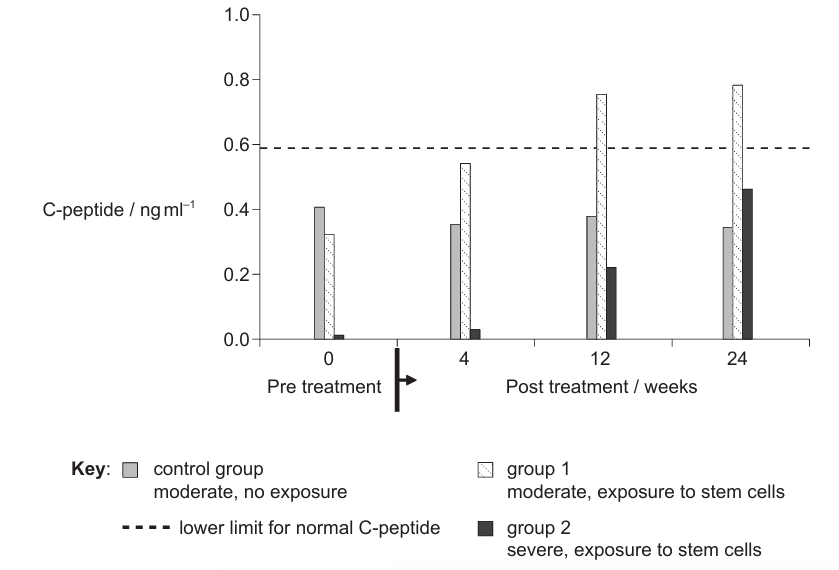
Compare and contrast the results of the treatment on group 1 with the results of the treatment on group 2.
Suggest an ethical advantage of using this type of therapy over embryonic stem cell therapy.
Using the data from all three studies, evaluate the use of embryonic stem cells as a treatment for type I diabetes.