EduNinja
Question rangeC4.1.5—Carrying capacity
[Maximum number: 16]

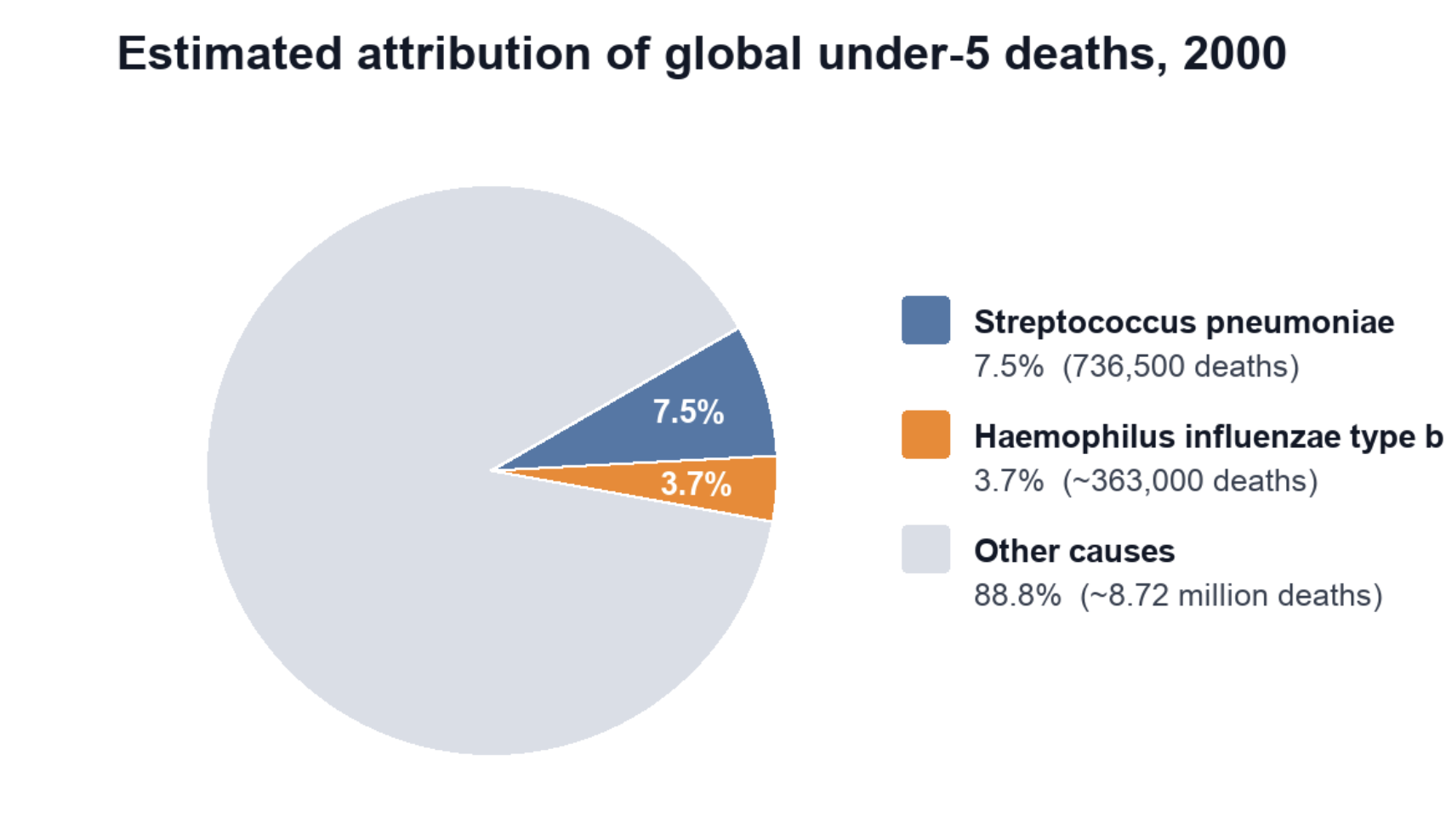
According to the UN Inter-agency Group for Child Mortality Estimation, in the year 2000 there were 9.82 million deaths of children under the age of 5 . Many of these deaths were caused by infectious diseases. The pie chart shows estimates for the percentages of deaths that were attributable to two of the most frequent pathogens, Streptococcus pneumoniae and Haemophilus influenzae.

Question image
[Maximum number: 12]

There is growing evidence of a decrease in bee populations. This decrease is a serious problem because of their valuable role as pollinators in the ecosystems where they live. Neonicotinoid pesticides have been implicated in this decrease because they have been found at trace levels in the nectar and pollen of crop plants and in the bee colonies.
Scientists placed colonies of a species of bumblebee, Bombus terrestris, in the laboratory to test the effects of different levels of a neonicotinoid on their development. They divided the colonies into three groups:
- The control colonies were given a solution of water and sugar that resembled nectar produced by flowers.
- A second group of colonies was given the same sugar solution containing a neonicotinoid dissolved in it at low concentrations, similar to those found in nature.
- A third group of colonies was given the same sugar solution containing a neonicotinoid dissolved in it at high concentrations, similar to those found in nature.

After two weeks, all colonies were placed in the field to allow the bumblebees to feed naturally.

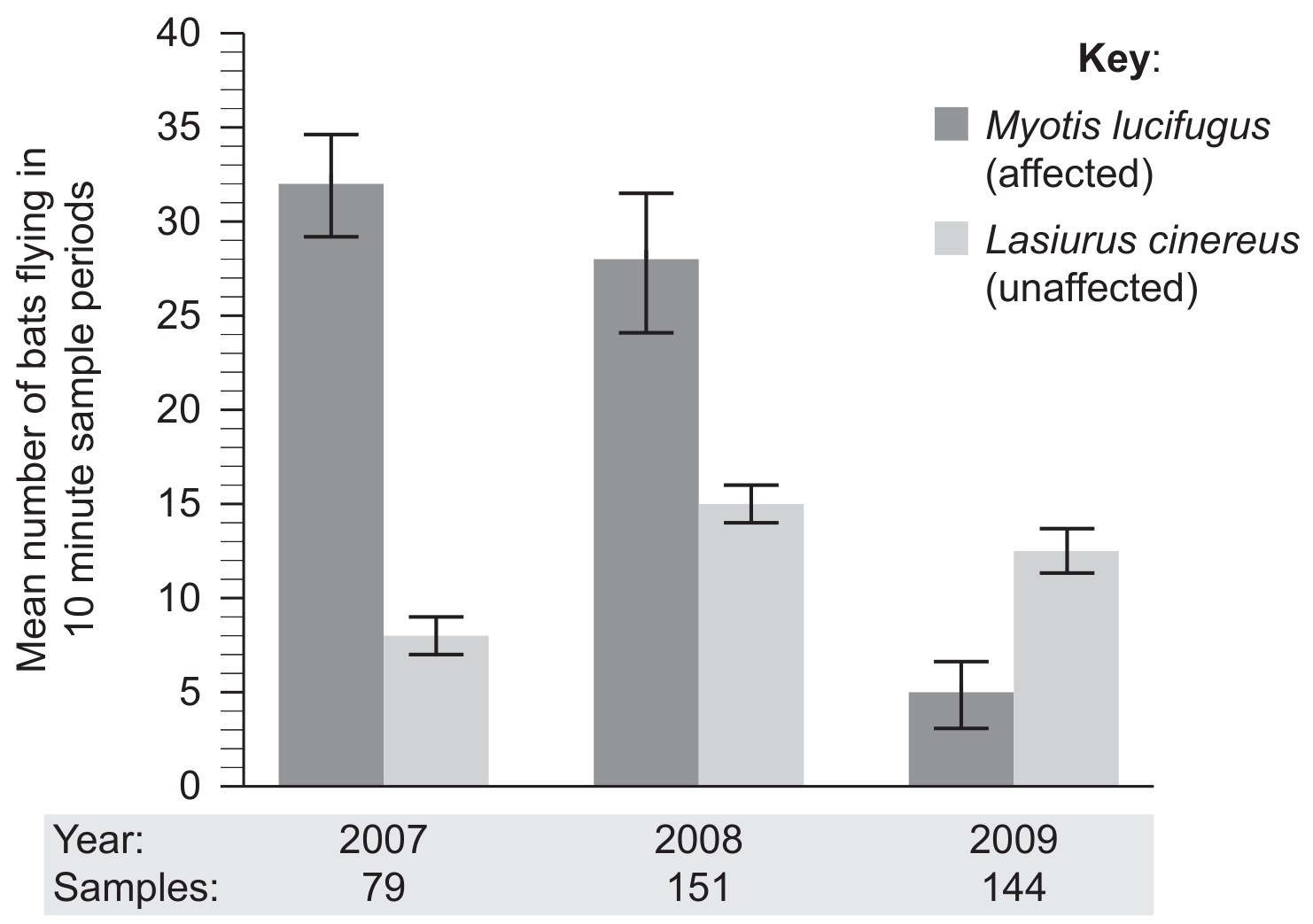
White-nose syndrome (WNS) is a disease caused by the fungus Geomyces destructans. This kills bats from many species during their winter hibernation. Scientists used echolocation to record the number of bat flights over a station in 10 minute sample periods during the summers of 2007 to 2009. The graph shows the mean number of flights and number of recording samples for little brown bats (Myotis lucifugus), a species affected by the fungus, along with those of hoary bats (Lasiurus cinereus), which are not affected.

Question image
[Maximum number: 1]

In an animal population, what could cause the exponential phase of population growth to level out to the plateau phase?

A

Increased species diversity

B

Increased resources

C

Increased natality

D

Increased predation

The probability of extinction of a species increases if the population is small with low genetic variation.

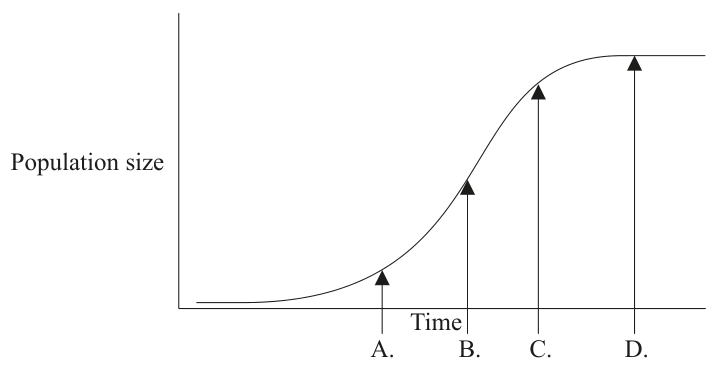
The graph shows a predicted population growth curve when a small number of rats are accidentally introduced to an island where they do not naturally occur. When is there most likely to be a balance between natality and mortality?

Question image
[Maximum number: 1]

In 1789 Gilbert White, a naturalist, observed eight breeding pairs of swifts (Apus apus) in the English village of Selborne. On average, each pair of swifts produces two offspring per year. This would allow the population to rise to 1030 swifts over 200 years. A bird survey carried out in 1983 revealed only 12 breeding pairs in this village.

What could have prevented the numbers rising to 1030 ?
I. The number of nesting sites remained the same.
II. The food supply of the swifts remained constant.
III. Predatory birds in the area were exterminated.

A

I only

B

I and II only

C

II and III only

D

I, II and III

[Maximum number: 1]

What can limit increases in population size?
I. Decrease in prey
II. Decrease in parasites
III. Increase in predators

A

I and II only

B

I and III only

C

II and III only

D

I, II and III

[Maximum number: 7]

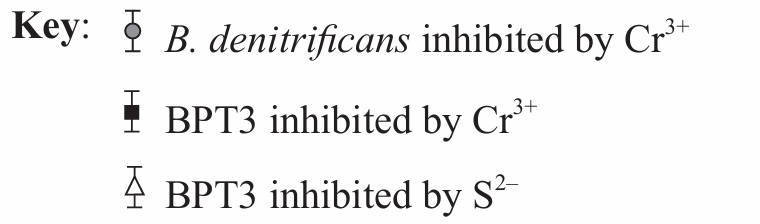
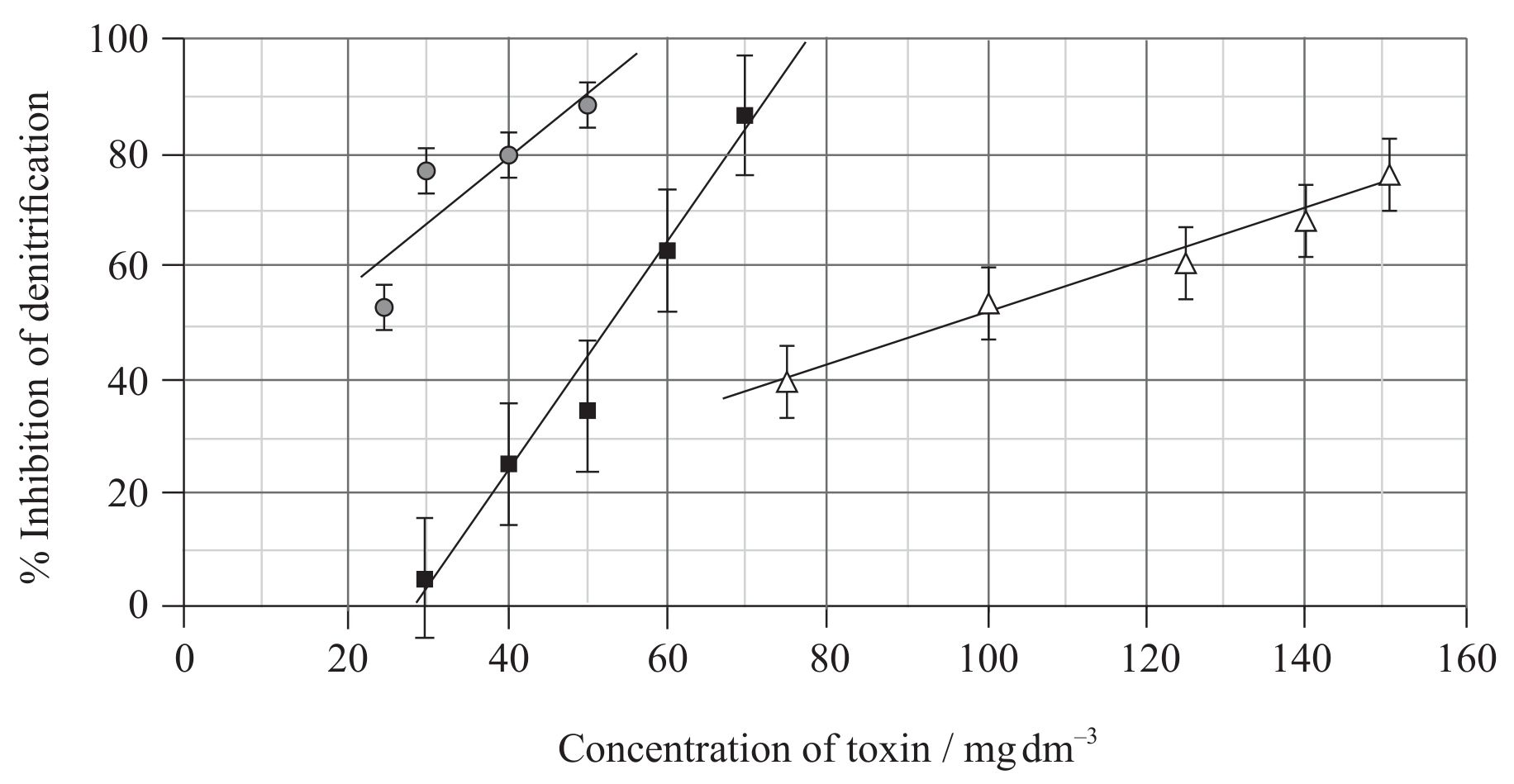
Waste water from industrial processes contains a range of toxic substances that are harmful to the environment. These toxins include sulphide ( S2\mathrm{S}^{2-} ) and metal ions such as chromium (Cr3+)\left(\mathrm{Cr}^{3+}\right). Microorganisms such as Brachymonas denitrificans that carry out denitrification of waste water, may be inhibited by these toxins. The effects of different concentrations of toxins on the rates of denitrification by B. denitrificans and a group of denitrifying bacteria named BPT3 are shown in the graph below.

Question image
Question image
0