[Maximum number: 7]
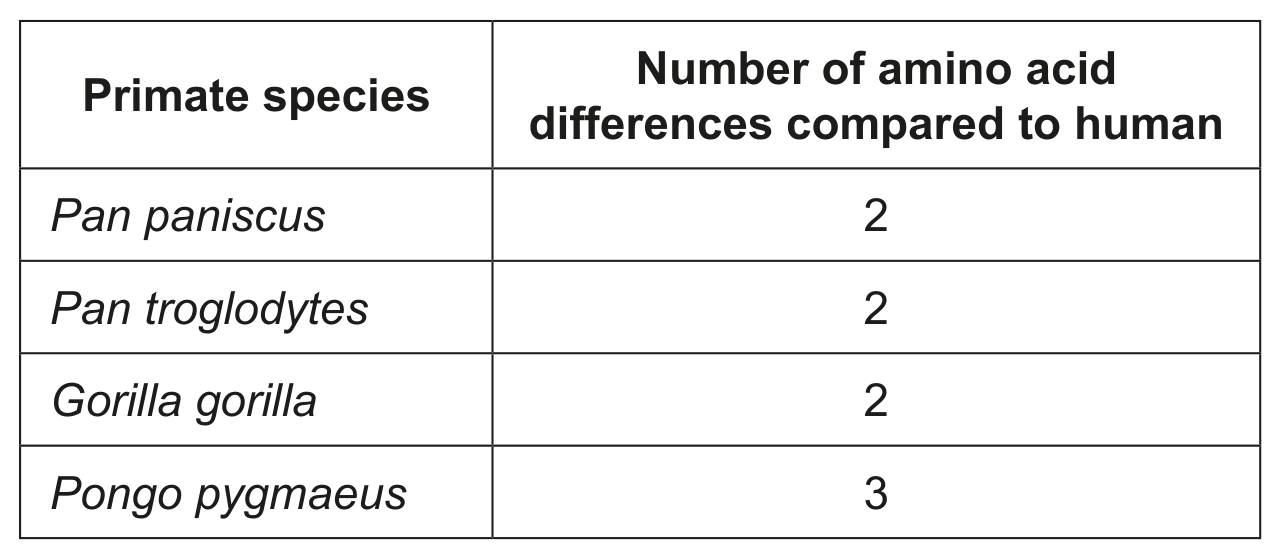
The table shows the number of amino acids that are different in the sequences of the protein FOXP2 from a human compared with four other primate species.
 EduNinja
The table shows the number of amino acids that are different in the sequences of the protein FOXP2 from a human compared with four other primate species.
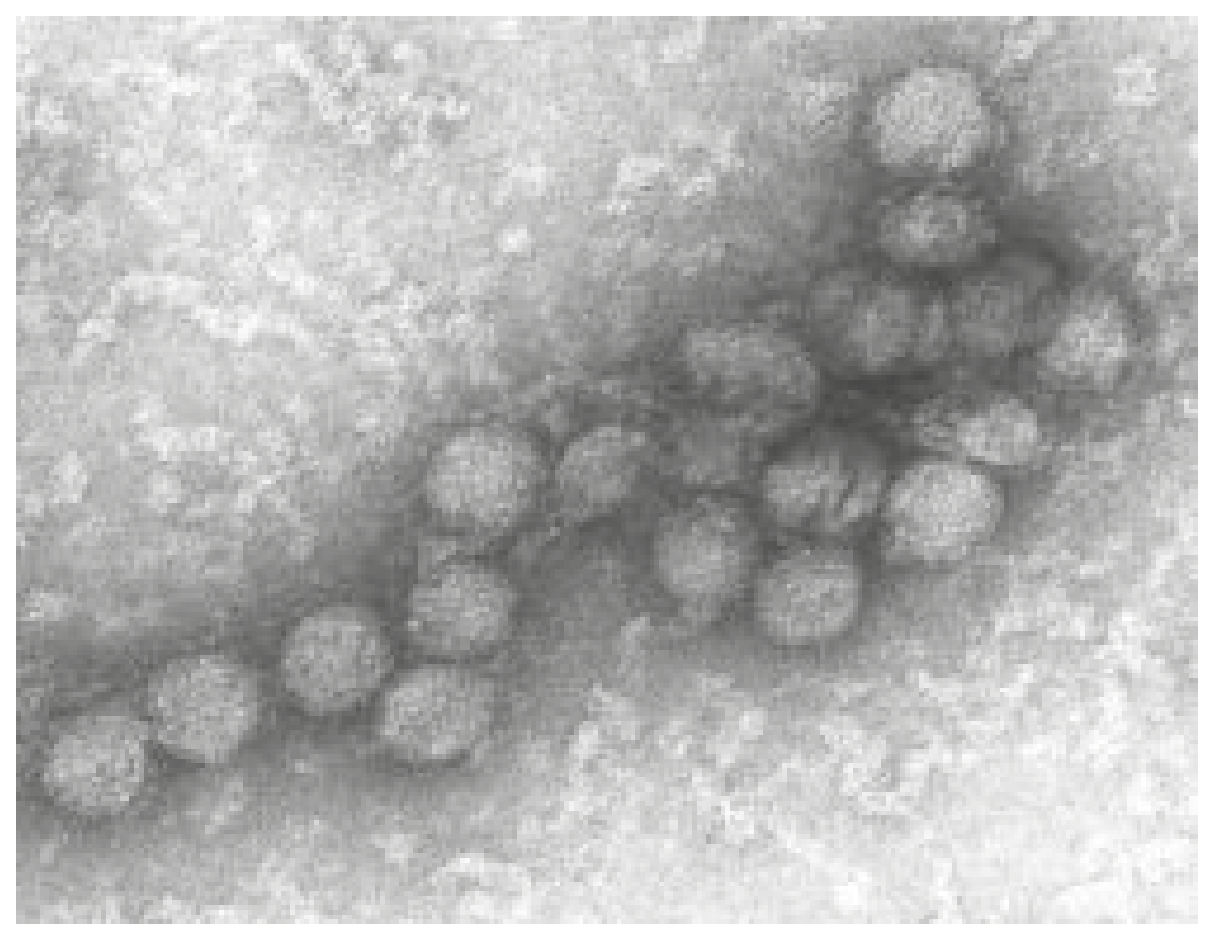
The electron micrograph shows the Japanese encephalitis virus.
Why are some diseases, such as Japanese encephalitis, known as zoonoses?
They can be directly transferred from an animal to humans.
They are transferred from human to human.
They are only found in animals in captivity (zoos).
They can directly transfer antigens into animal cells.
What do rabies, tuberculosis and Japanese encephalitis have in common?
They are all infectious diseases caused by bacteria.
They are all infectious diseases caused by viruses.
They are all zoonoses.
They are all infecting red blood cells.
Which illness is an example of a zoonosis?
Common cold
Rabies
Cholera
Coronary heart disease
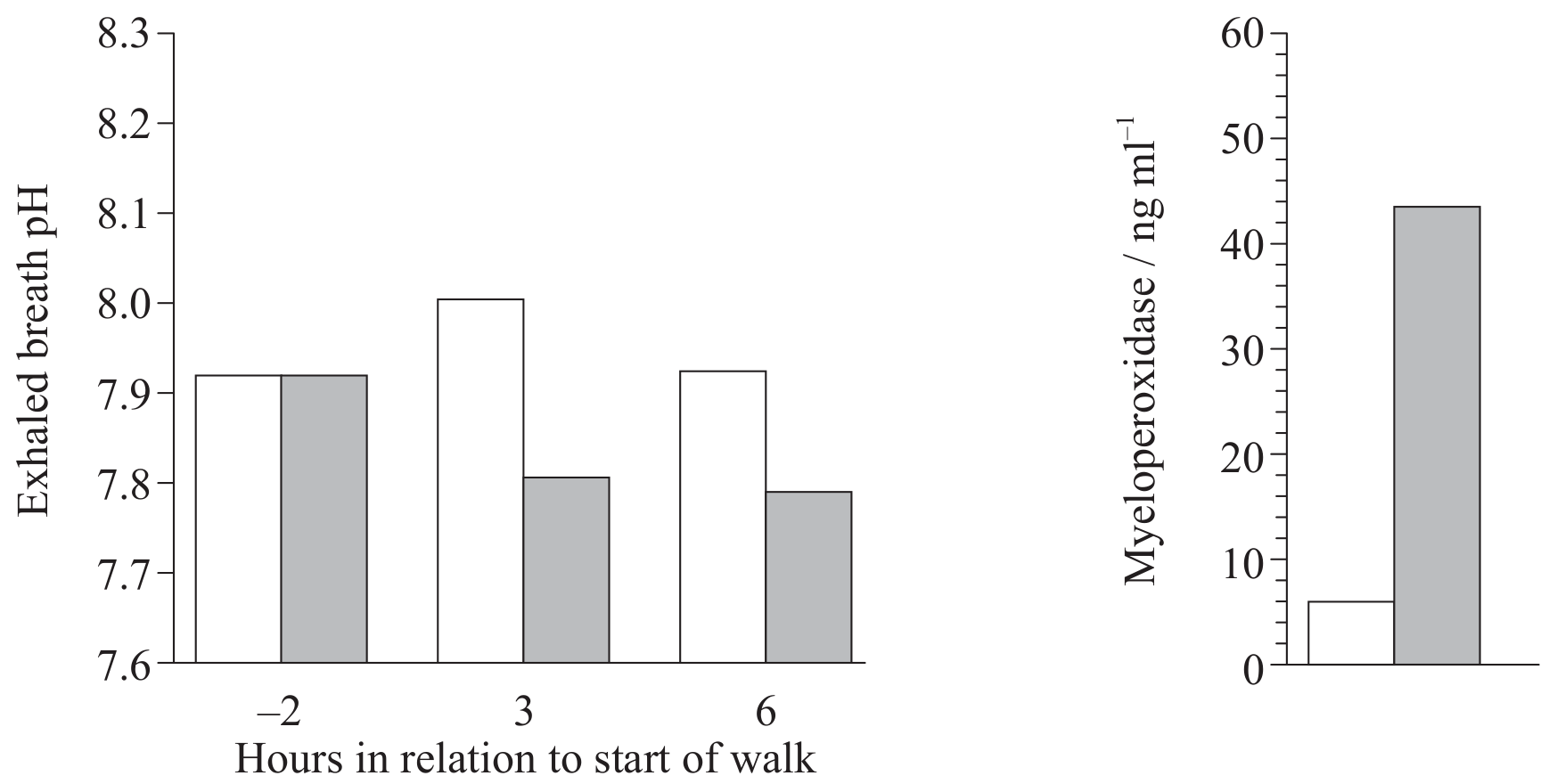
Researchers explored the effects of roadside traffic exposure in London on people with asthma. Each participant walked for two hours through Hyde Park, a large traffic-free park, and on a separate occasion along Oxford Street, where diesel-powered buses and taxicabs are permitted. The researchers measured the pH of the participants' exhaled breath two hours before each walk and three hours and six hours after the start of each walk. The level of an inflammation indicator, myeloperoxidase, was also measured the day after the experiment.