EduNinja
Question rangeC2.2.5—Synapses as junctions
[Maximum number: 11]

Exposure to organophosphorus pesticides (OP) is a cause of serious nerve damage. It disrupts synaptic transmission by inhibiting the enzyme acetylcholinesterase, causing death due to cardiovascular and respiratory failure.

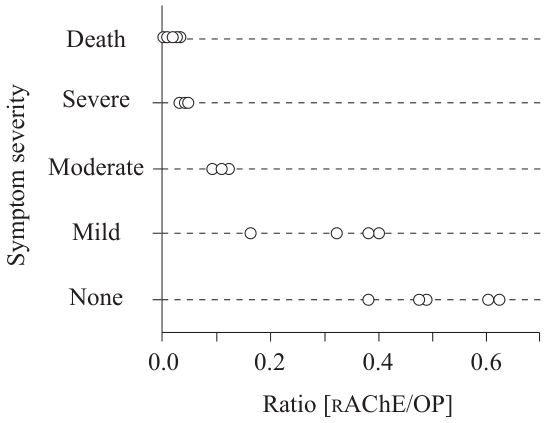
Recombinant human acetylcholinesterase ( RAChE ) was obtained by genetic engineering and produced in Nicotiana benthamiana plants. It was tested as a new therapeutic treatment in mice that were exposed to OP. The following graph shows the severity of the symptoms shown by each mouse at different ratios of RAChE to OP.
Question image
(a)

State the minimum ratio at which some mice showed no symptoms.

[ 1 ]
(b)

Analyse the effect of increasing the ratio of RAChE to OP on the symptoms in mice.

[ 3 ]
(c)

Predict what would happen if a mouse received 300 mg of RAChE and 600 mg of OP.

[ 2 ]
(d)

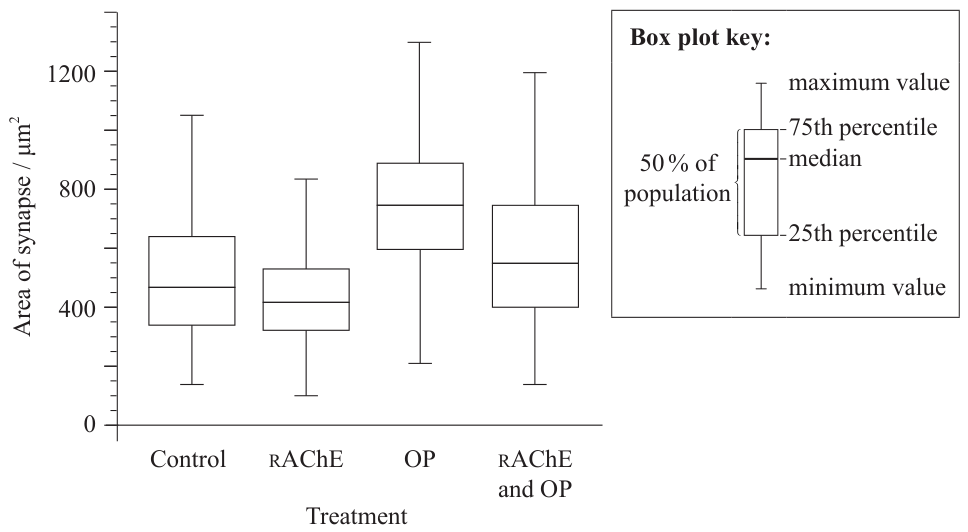
To test the effect of OP damage on synapses, mice were treated with RAChE, OP or both. Their diaphragms were dissected 10 days after treatment. The area of the synapse between axons and the diaphragm was measured. When the synapses are damaged by OP there is a greater area. The box plot shows the effect of different treatments on the area of the synapse.
Question image

Calculate the difference in median area of synapse between the control mice and mice treated with rAChE and OP, giving the units.

[ 1 ]
(e)

Describe the evidence for damage to synapses by OP provided by data in the box plot.

[ 2 ]
(f)

Using the data from both graphs, evaluate the hypothesis that plant-produced RAChE could be used to protect humans or other mammals from damage caused by exposure to OP .
[ 2 ]
(a)
(i)

Outline how the amphipathic properties of phospholipids play a role in membrane structure.

[ 2 ]
(ii)

State the role of cholesterol in animal cell membranes.

[ 1 ]
(b)

Describe what happens to the membranes of an animal cell during mitosis.

[ 2 ]
(c)

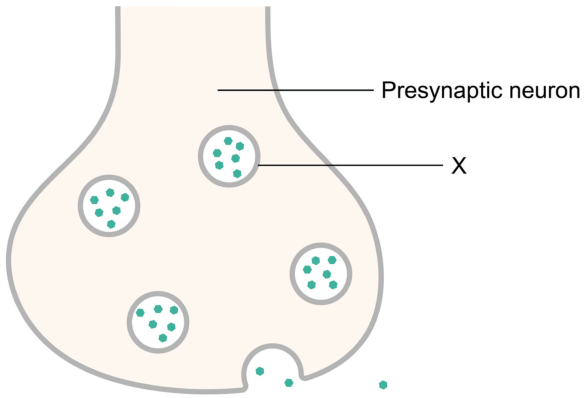
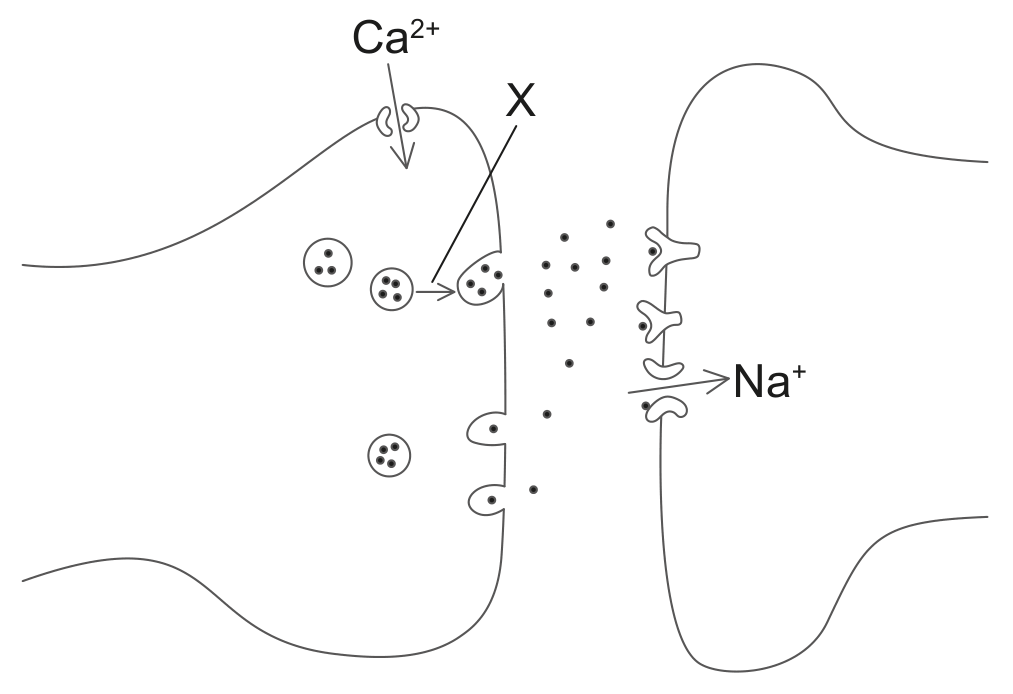
The diagram shows part of two neurons.

Question image
[ 4 ]
(i)

State the name of the structure shown.

[ 1 ]
(ii)

X indicates the movement of a structure in the neuron. Explain what events trigger this movement and what happens next.

[ 3 ]
[Maximum number: 9]

Honey bees (Apis mellifera) live in colonies where some workers exhibit scouting behaviour. The scouts communicate information on new food sources to the non-scouting workers of the colony.

(a)

Outline how the scouts communicate the location of new food sources to the non-scouts.

[ 2 ]
(b)

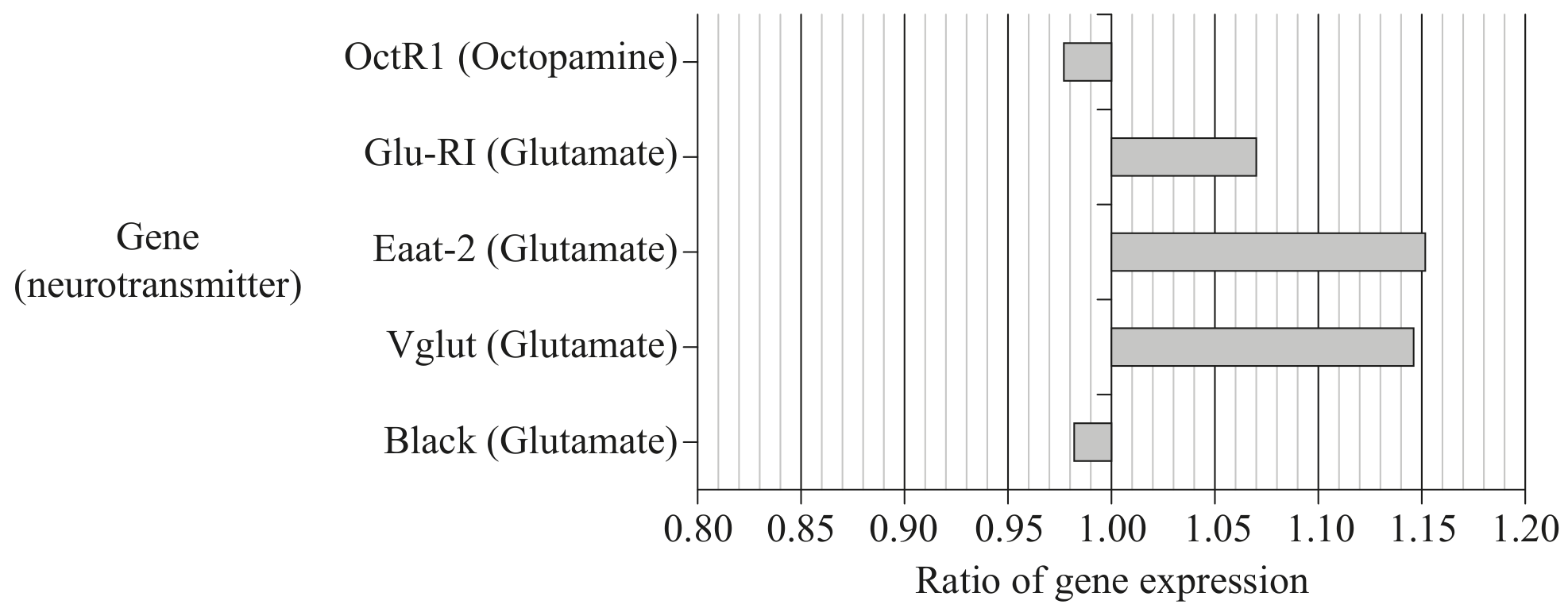
Biologists compared food scouts to non-scouts to see if the gene expression for neurotransmitter signalling differs in their brain cells. Several genes for neurotransmitters were investigated by the scientists, including one gene for octopamine and four genes for glutamate.

 Ratio of gene expression = the gene expression in the scouts  the gene expression in the non-scouts \text { Ratio of gene expression }=\frac{\text { the gene expression in the scouts }}{\text { the gene expression in the non-scouts }}

The ratio of gene expression was calculated and the results are shown on the graph.

Question image

State what the ratio of 1.00 means.

[ 1 ]
(c)

State which gene shows the highest expression in the scouts compared to the non-scouts.

[ 1 ]
(d)

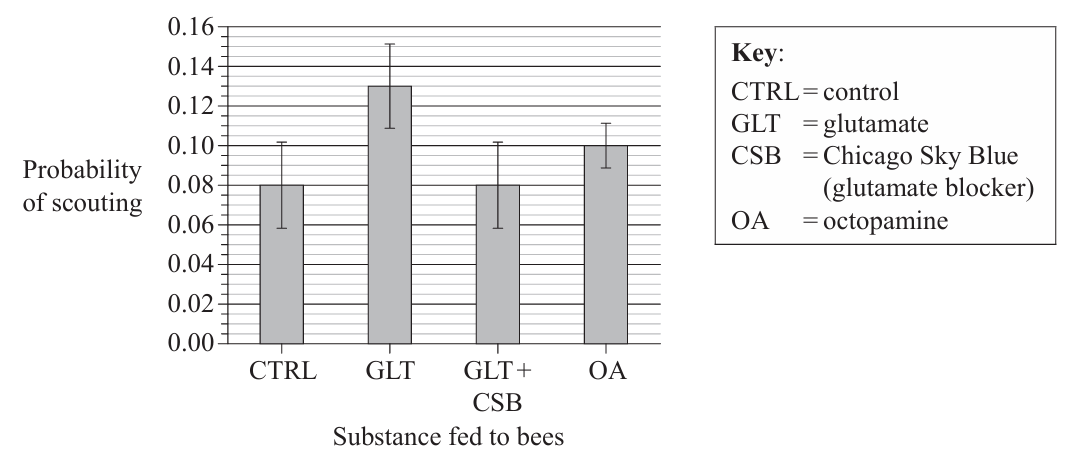
The biologists then fed non-scout bees various substances to see if they would promote scouting behaviour. The graph shows the effect of these substances.

Question image

Calculate the increase in the probability of scouting behaviour of non-scouts fed with GLT (glutamate) and OA (octopamine).
GLT:
OA:

[ 2 ]
(e)

Explain how natural selection could have affected the evolution of scouting behaviour in honey bees.

[ 3 ]
[Maximum number: 7]

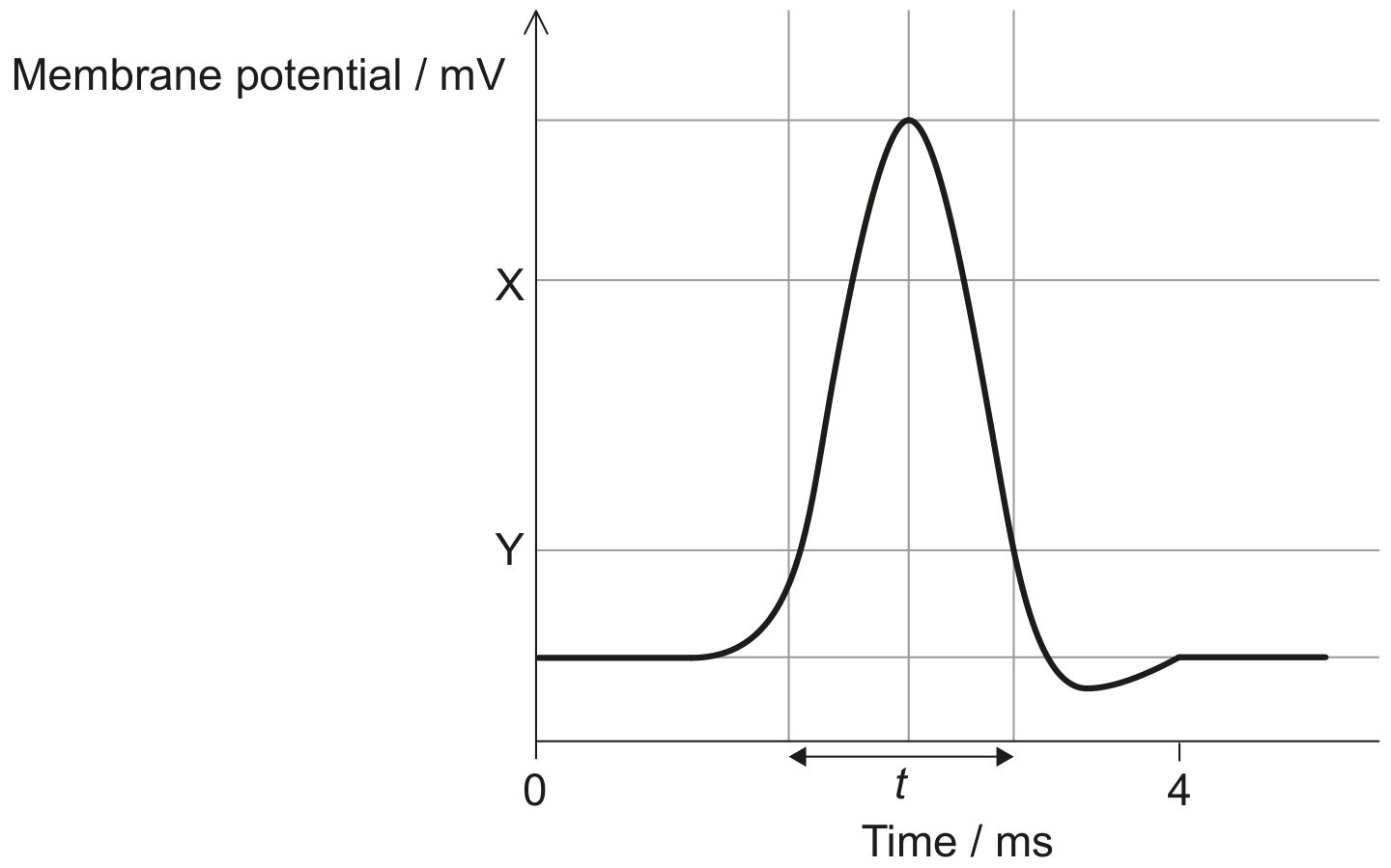
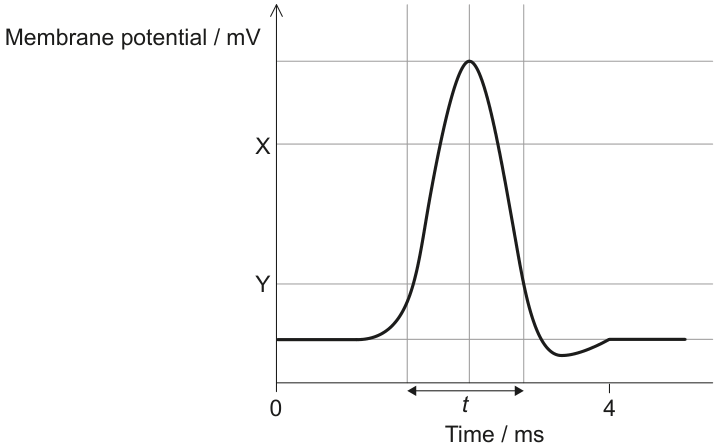
The graph shows the change in the membrane potential of an axon during an action potential.

Question image
(a)

State the approximate value of the membrane potential at X .

[ 1 ]
(b)

Y is the threshold potential. State what happens when the threshold potential is reached.

[ 1 ]
(c)

Describe the movements in ions that occur during time t.

[ 2 ]
(d)

Explain how a nerve impulse is passed on to other neurons.

[ 3 ]
[Maximum number: 1]

What occurs during the transmission of an impulse at a synapse?
I. Acetylcholine is released into the synaptic cleft by exocytosis when calcium ions enter the presynaptic neuron.
II. Acetylcholine diffuses across the synaptic cleft and binds to receptors on the postsynaptic membrane.
III. Acetylcholine is broken down by cholinesterase and resorbed into the presynaptic neuron once an impulse has been initiated on the postsynaptic membrane.

A

I and II only

B

II and III only

C

I and III only

D

I, II and III

[Maximum number: 1]

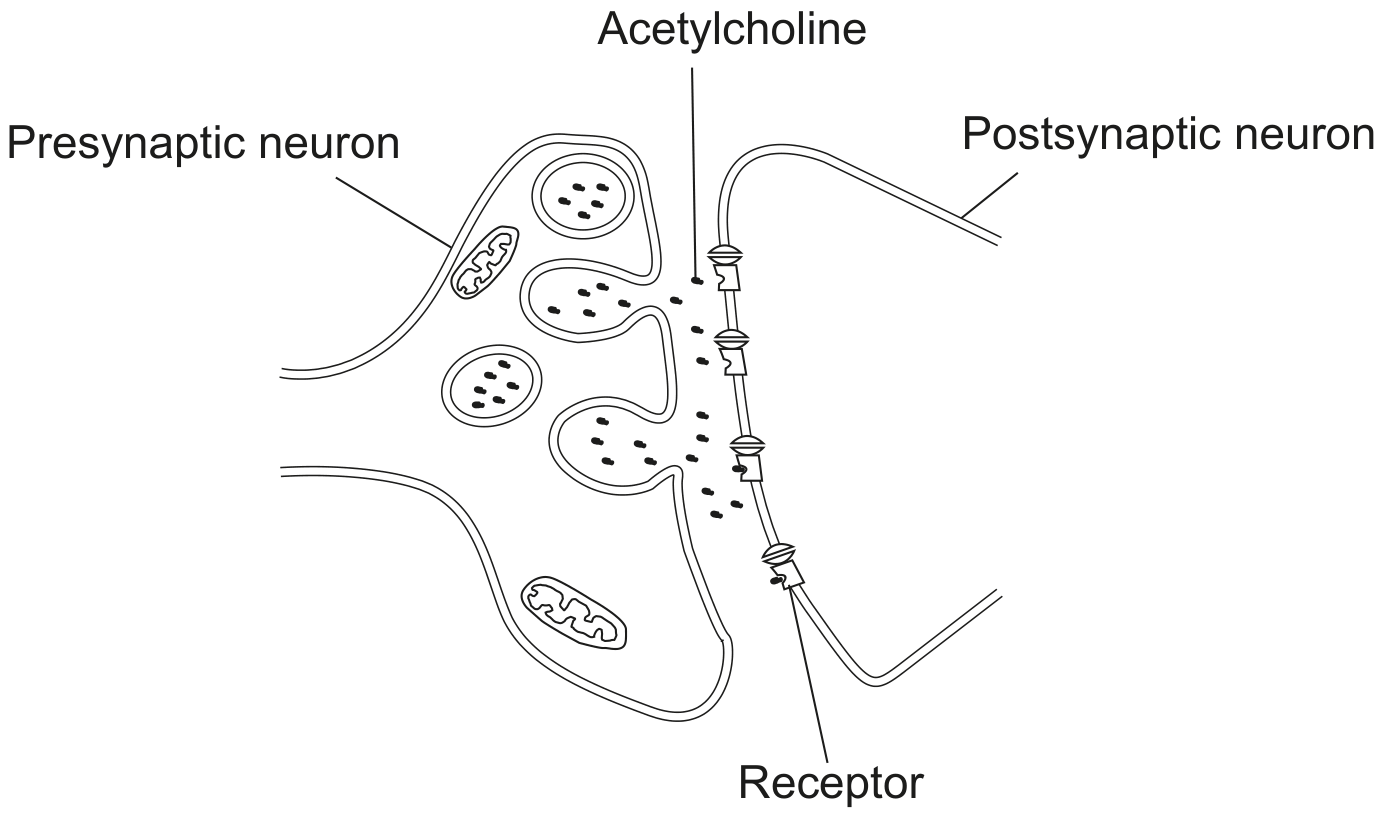
The diagram shows the synaptic transmission of nerve impulses by the neurotransmitter acetylcholine.

Question image

What is the fate of acetylcholine immediately after binding to the receptor?

A

It is pumped into the postsynaptic neuron.

B

It diffuses into the presynaptic neuron.

C

It is broken down in the synaptic cleft.

D

It binds to another receptor in the postsynaptic neuron.

[Maximum number: 4]

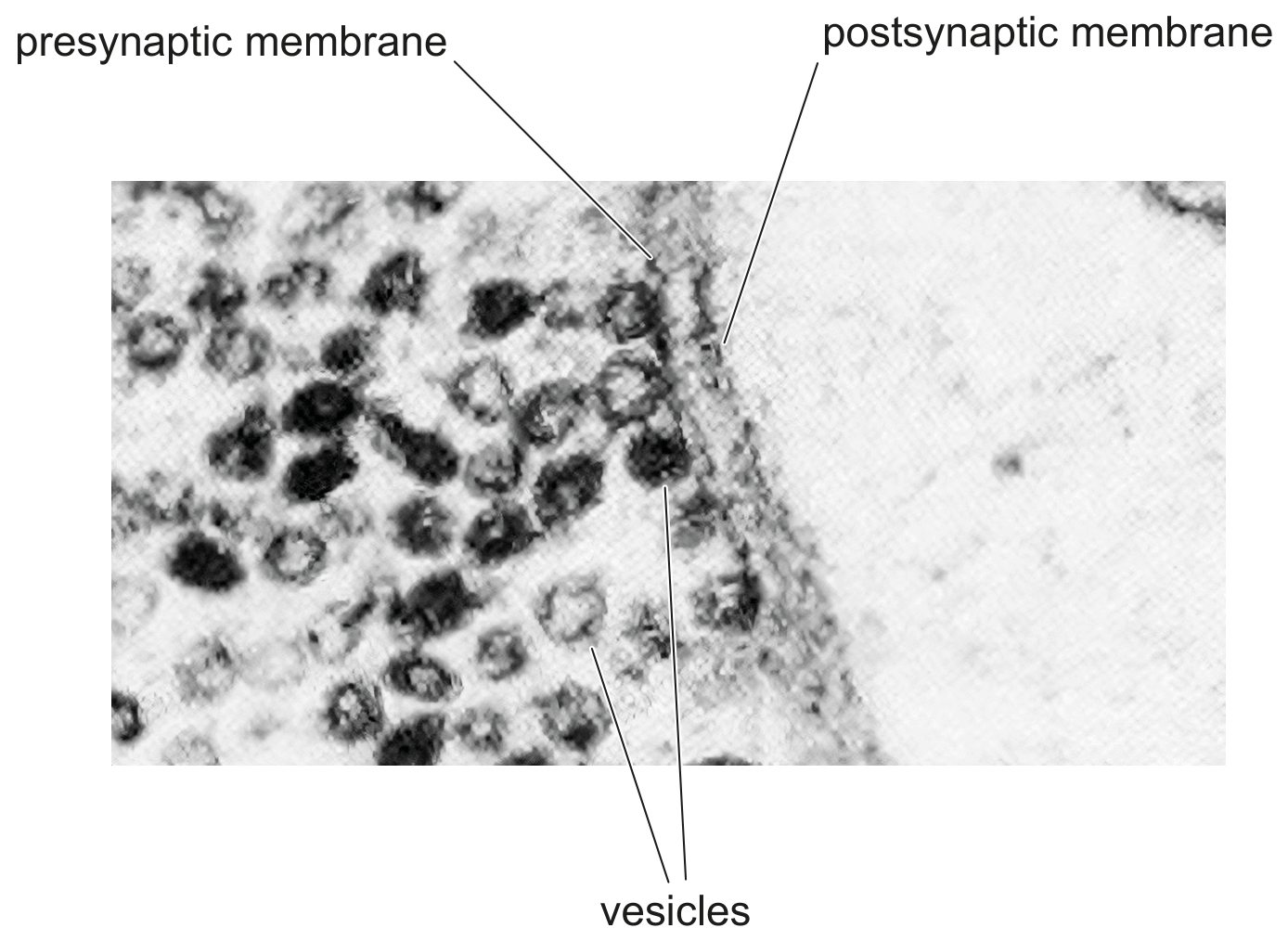
The electron micrograph shows part of a synapse between two neurons.

Question image
(a)

Deduce what type of substance the vesicles contain.

[ 1 ]
(b)

Distinguish between the presynaptic and postsynaptic membranes by giving two differences.

[ 2 ]
(c)

The gap between the presynaptic and postsynaptic membranes is very narrow. Suggest an advantage of this.

[ 1 ]
[Maximum number: 6]

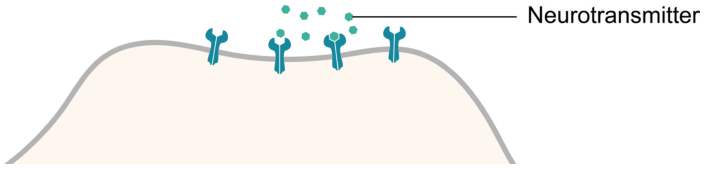
The diagram shows the release of a neurotransmitter across a synapse.

Question image
Question image
(a)

Identify the structure labelled X .

[ 1 ]
(b)

Outline how the neuron is stimulated to release the neurotransmitter.

[ 2 ]
(c)

Explain the action of neonicotinoid pesticides in insects.

[ 3 ]
[Maximum number: 7]

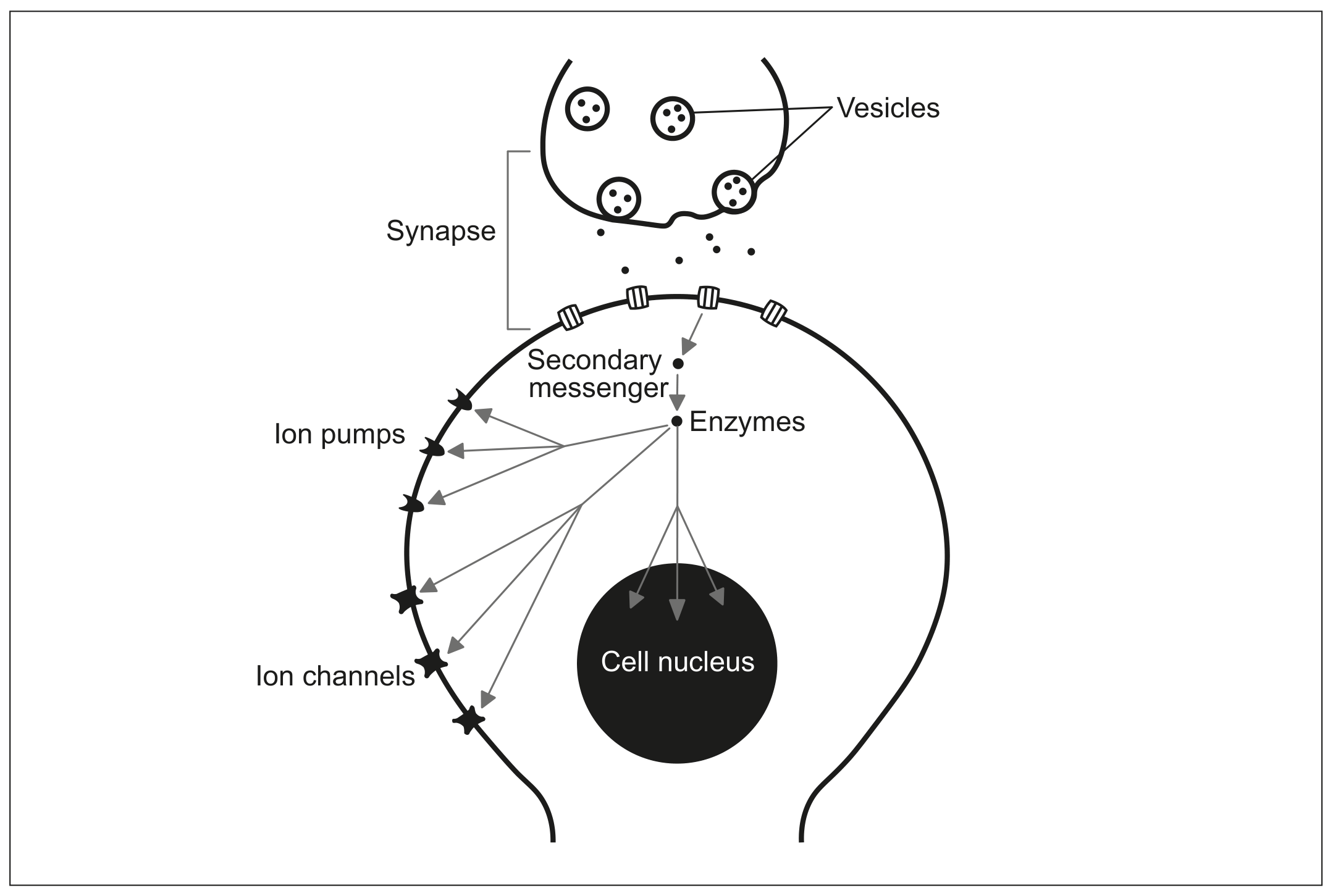
The diagram shows the signalling pathways involved in slow synaptic transmission.

Question image
(a)

On the diagram, label a

[ 2 ]
(i)

neurotransmitter receptor

[ 1 ]
(ii)

presynaptic membrane.

[ 1 ]
(b)

State one example of a slow-acting neurotransmitter.

[ 1 ]
(c)

Outline the role of slow-acting neurotransmitters in learning.

[ 2 ]
(d)

Outline how MDMA (ecstasy) affects neurotransmitter metabolism in the brain.

[ 2 ]
[Maximum number: 7]

The graph shows the change in the membrane potential of an axon during an action potential.

Question image
(a)

State the approximate value of the membrane potential at X .

[ 1 ]
(b)

b) Y is the threshold potential. State what happens when the threshold potential is reached.

[ 1 ]
(c)

Describe the movements in ions that occur during time t.

[ 2 ]
(d)

Explain how a nerve impulse is passed on to other neurons.

[ 3 ]
0