EduNinja
Question rangeB3.2.3—Artery adaptations
[Maximum number: 14]

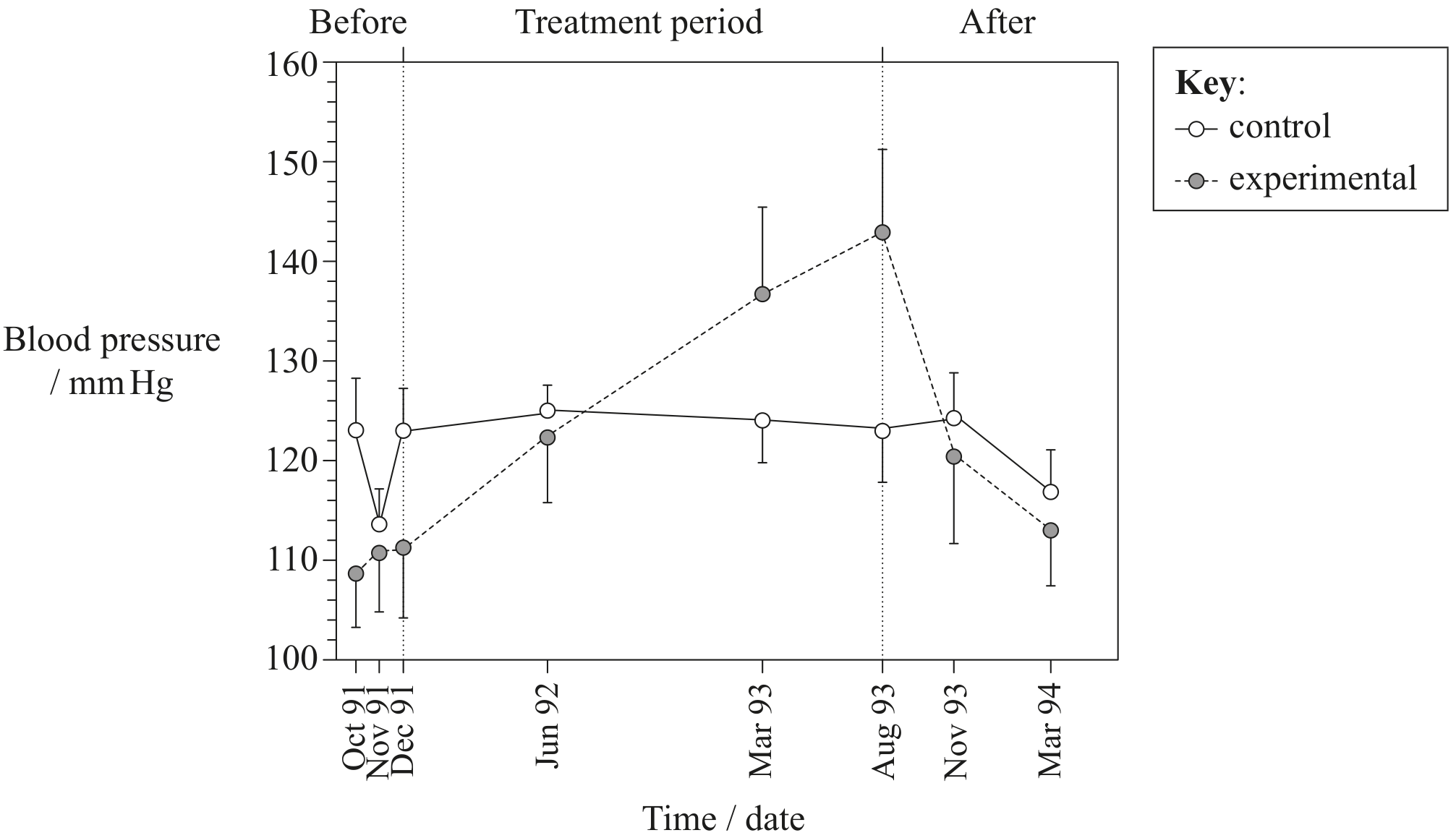
Hypertension (blood pressure exceeding 140 mmHg ) affects millions of people worldwide. Many modern societies consume more sodium in the form of salt (NaCl) than is required for normal physiology. The effect of changing the levels of dietary sodium has been studied in various organisms.

Scientists recorded the blood pressure changes in chimpanzees (Pan troglodytes) fed a diet without added sodium (control) or a sodium supplemented diet (experimental) as follows
- 5 grams of salt per day from December 1991 until May 1992
- 10 grams of salt per day until June 1992
- 15 grams of salt per day until August 1993
after which no more salt was added to the diet until the experiment ended.
Question image

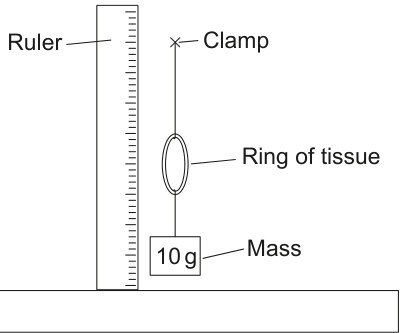
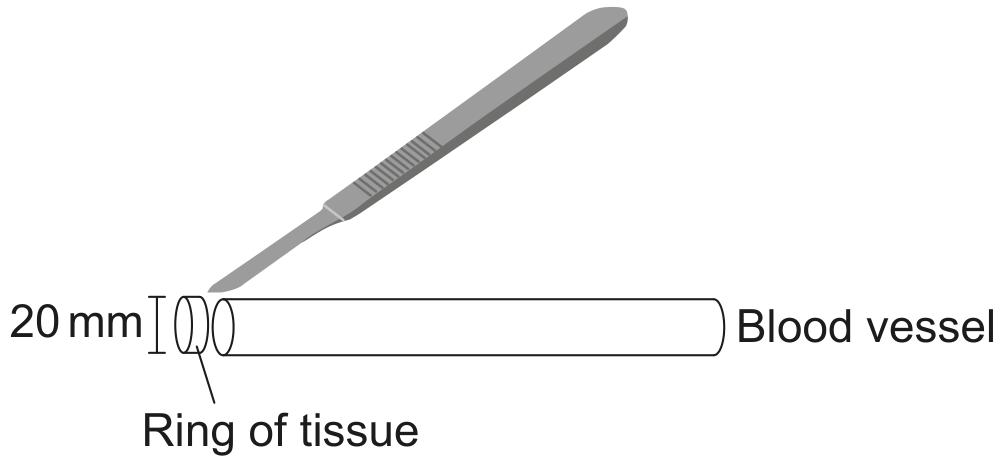
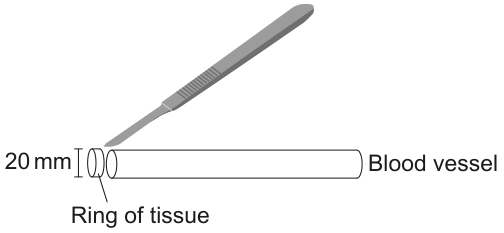
In an investigation to compare the elasticity of arteries and veins, rings of the same diameter (20 mm)(20 \mathrm{~mm}) of artery and vein tissue were cut from blood vessels obtained from a mammal.

Question image

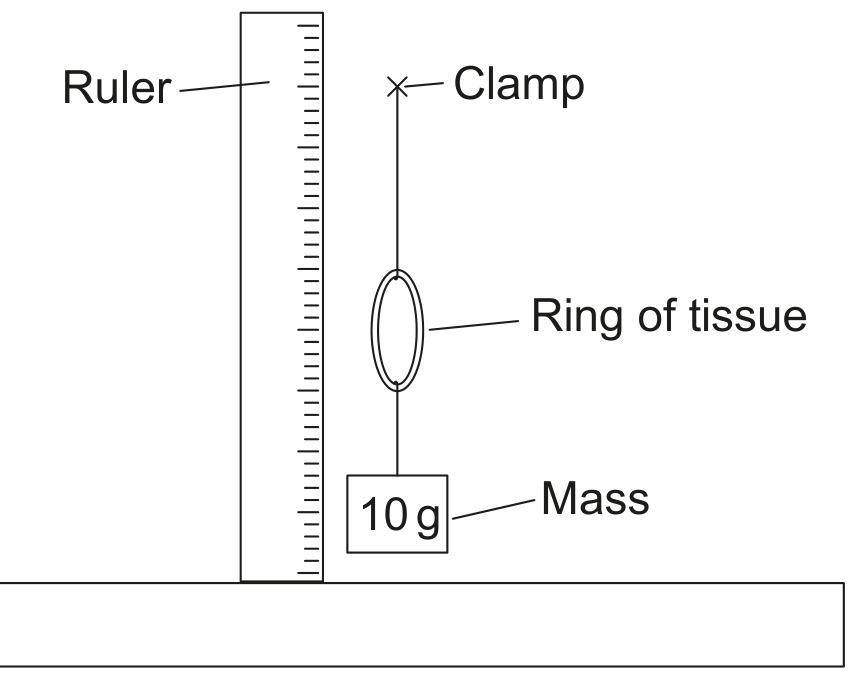
Each ring was attached to a clamp. Multiple masses of 10 g were added and removed. The vertical diameter of the artery and the vein was measured, both with the mass and once the mass had been removed.

Question image

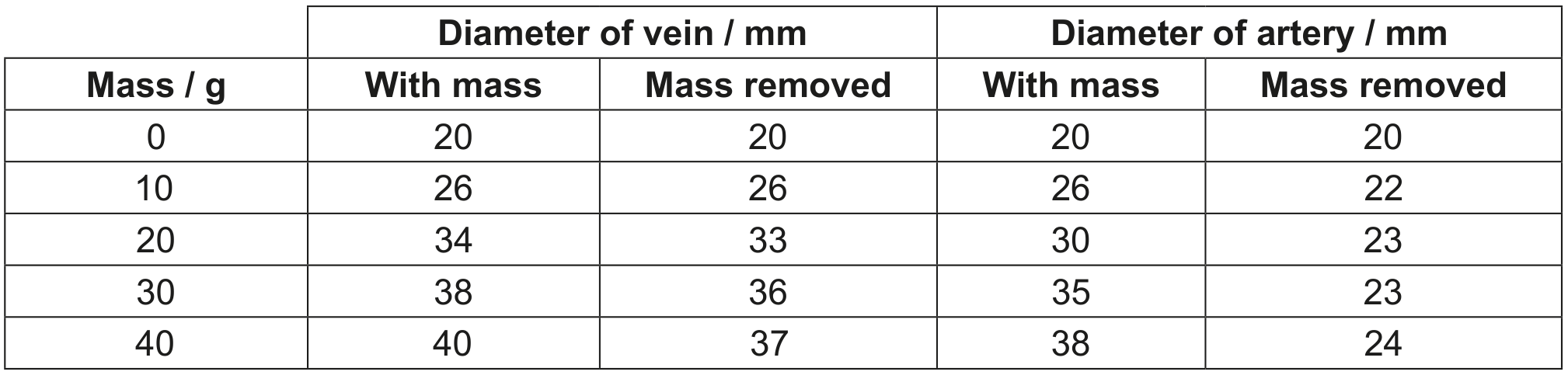
The results are shown in the table.

Diameter of vein / mmDiameter of artery / mm
Mass / gWith massMass removedWith massMass removed
020202020
1026262622
2034333023
3038363523
4040373824

In an investigation to compare the elasticity of arteries and veins, rings of the same diameter (20 mm)(20 \mathrm{~mm}) of artery and vein tissue were cut from blood vessels obtained from a mammal.

Question image

Each ring was attached to a clamp. Multiple masses of 10 g were added and removed. The vertical diameter of the artery and the vein was measured, both with the mass and once the mass had been removed.

Question image

The results are shown in the table.

Table
[Maximum number: 1]

What is a property of arteries?

A

Arteries have elastic walls.

B

Arteries have valves.

C

All arteries carry oxygenated blood.

D

Arteries receive blood from the atria.

[Maximum number: 1]

In arteries, what are the functions of the lumen and the elastic fibres in the wall?

Lumen

Elastic fibres

Allows unobstructed flow of blood

Prevent excessively high blood pressure when
the semilunar valves in the heart are open

Allows unobstructed flow of blood

Maintain blood pressure when the semilunar
valves in the heart are closed

Regulates rate of blood flow

Increase blood flow to organs that are active

Regulates rate of blood flow

Decrease blood flow to organs that are inactive

[Maximum number: 1]

Which blood vessels have thick muscular walls that can resist pressure and assist in pumping blood?

A

Arteries

B

Atria

C

Veins

D

Ventricles

[Maximum number: 1]

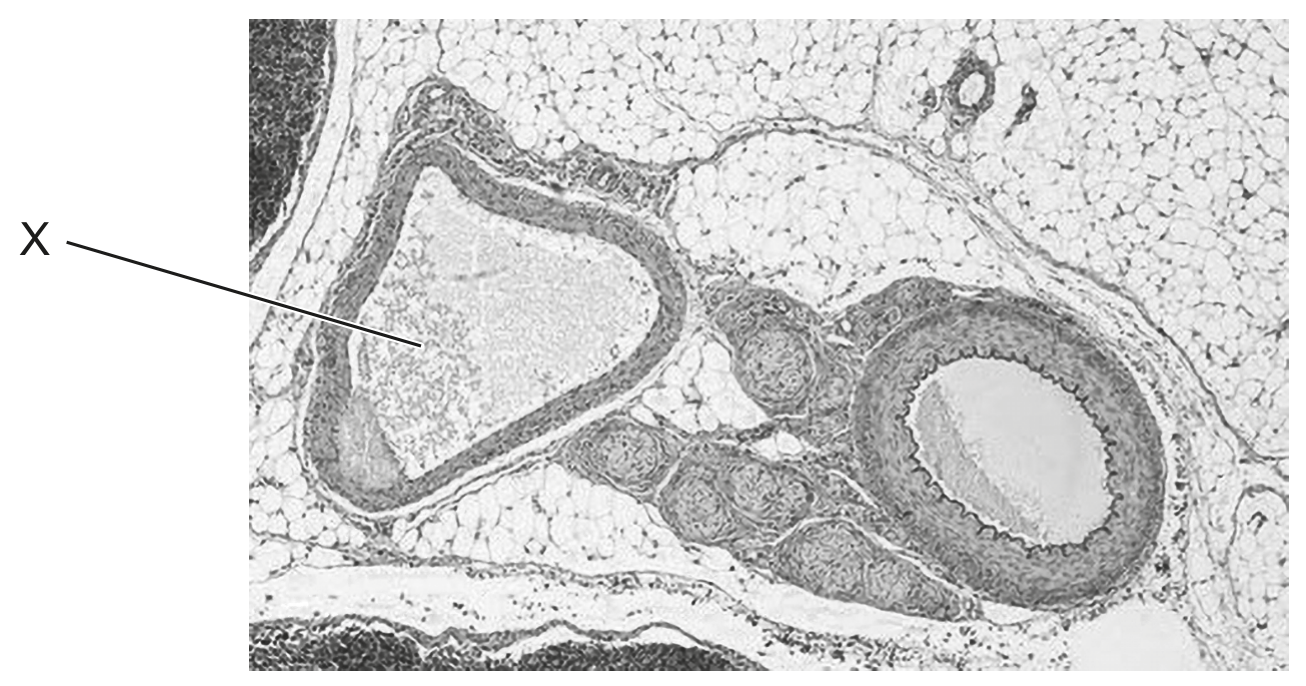
The micrograph shows a transverse section of blood vessels in a human leg muscle.

Question image

Which is the main contributor to the movement of blood along vessel X ?

A

The smooth surface of the inner lining

B

Stretching and recoiling of the vessel walls

C

Differences in plasma solute concentration

D

Contraction of muscles adjacent to the vessel

[Maximum number: 1]

What feature of arteries is most important in maintaining sufficiently high blood pressure?

A

A wide lumen

B

Elastic fibres in the wall

C

Valves at intervals

D

A thin wall

[Maximum number: 4]

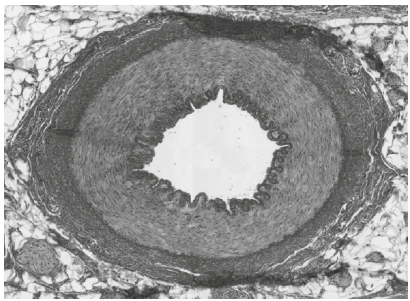
This micrograph shows a transverse section of an artery.

x100

x100

0