EduNinja
Question rangeB2.3.1—Differentiation after fertilization

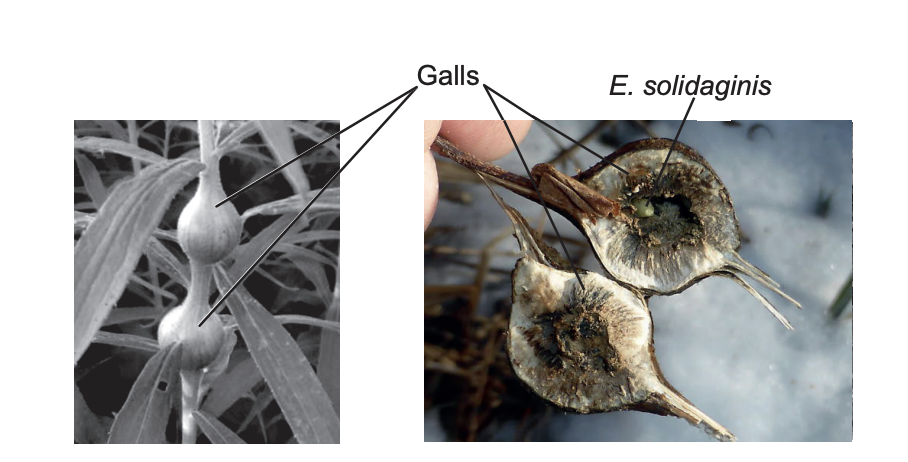
The larval stage of the fly Eurosta solidaginis develops in the plant Solidago altissima.

The larva secretes a chemical which causes plant tissue to grow around it forming a swelling called a gall. The gall provides the developing insect with protection from predators.
Question image

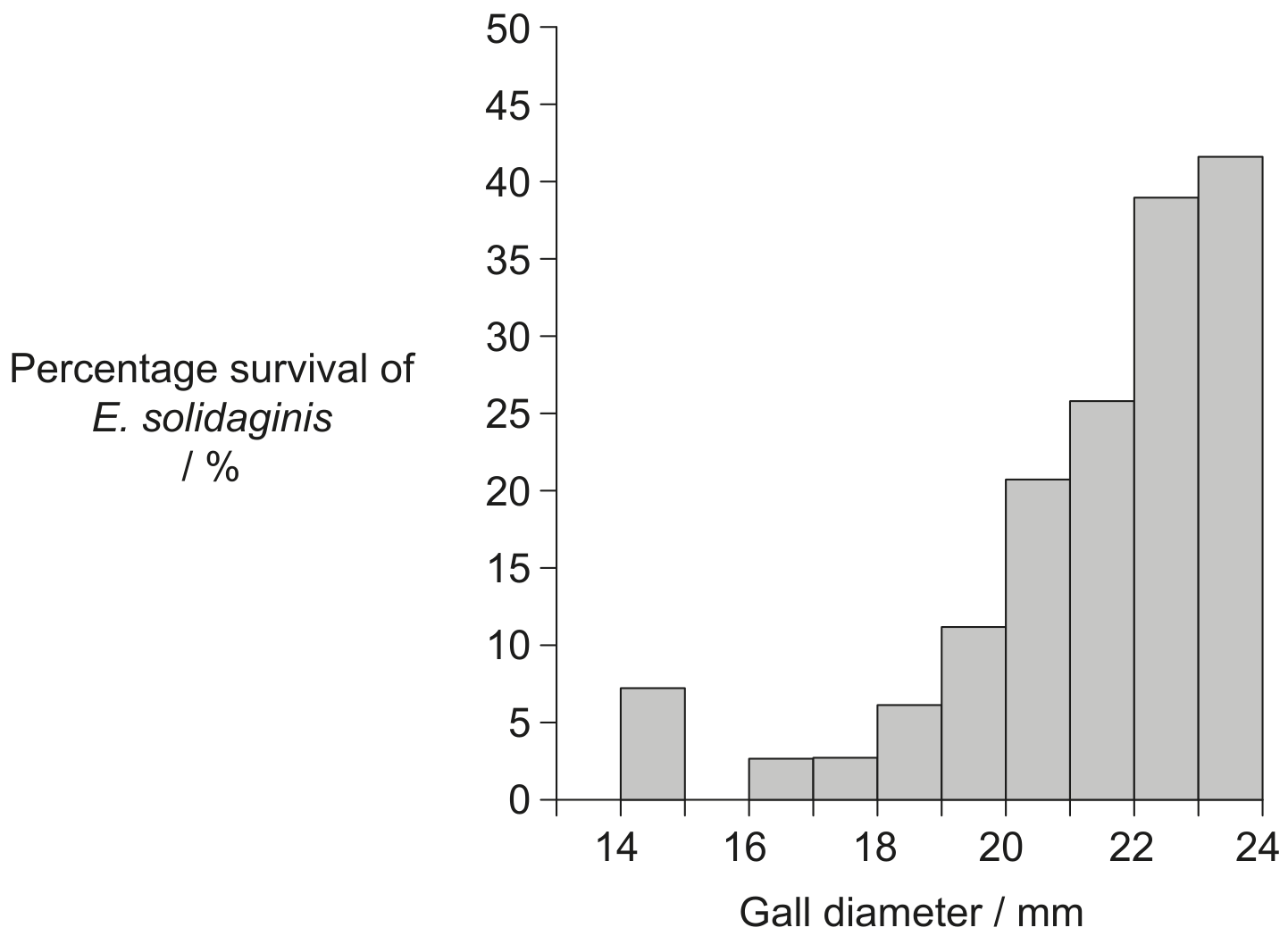
The E. solidaginis fly is preyed upon by the parasitic wasp Eurytoma gigantea. The graph shows the relationship between gall diameter and the percentage of flies that avoid predation by E. gigantea.
Question image

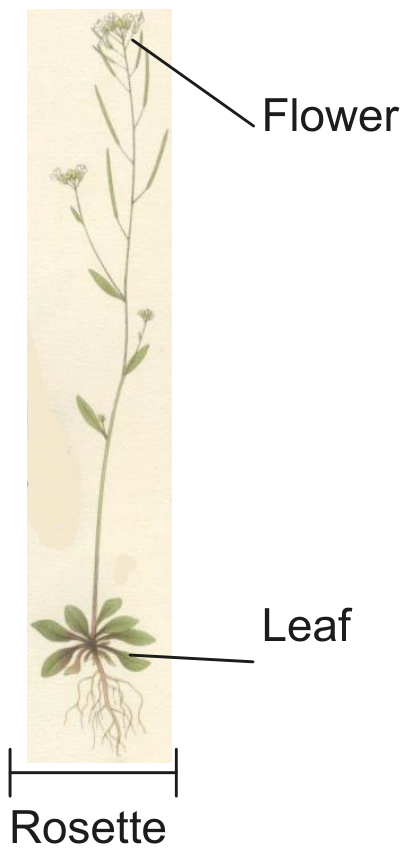
Arabidopsis is a small flowering plant in the mustard family (Brassicaceae) that is widely used in basic research. It has a short life cycle, flowers quickly producing a large number of seeds and is easy to cultivate. It forms a circle of leaves known as a rosette that lies close to the soil. Flowers form at the end of short stems.

Question image

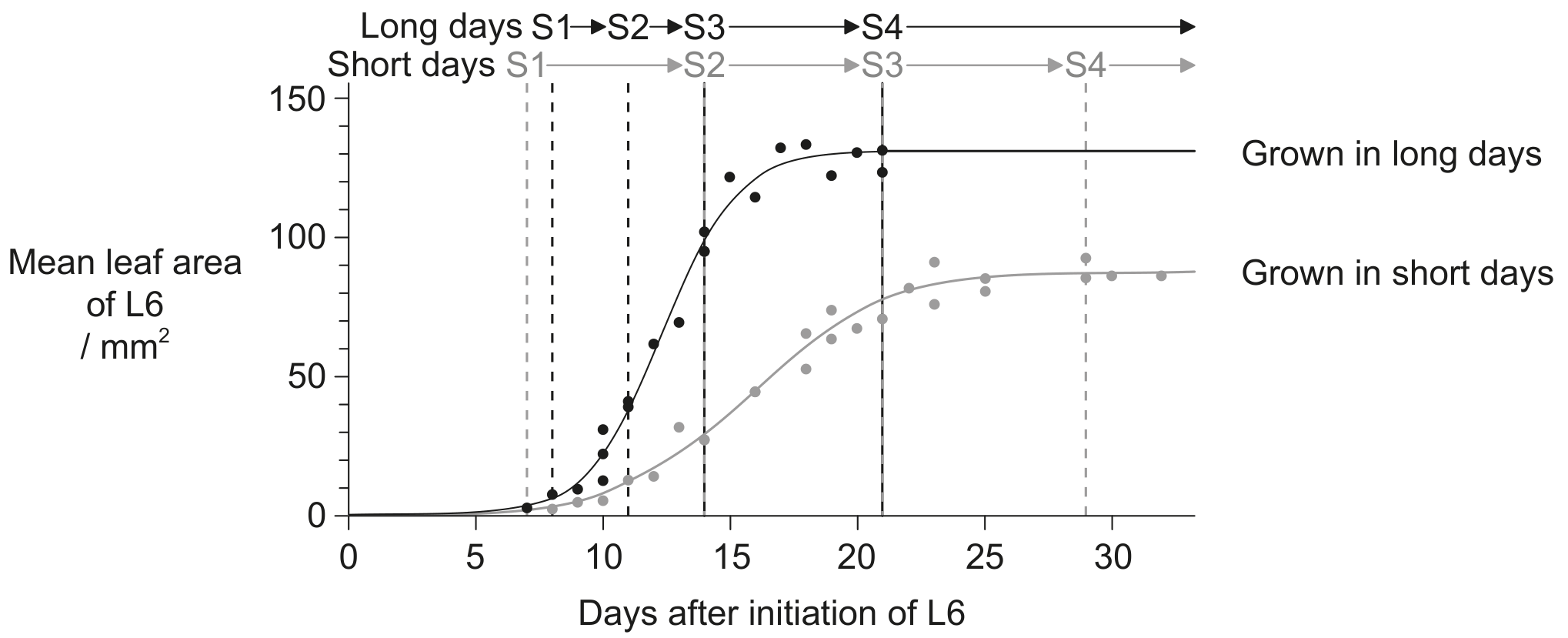
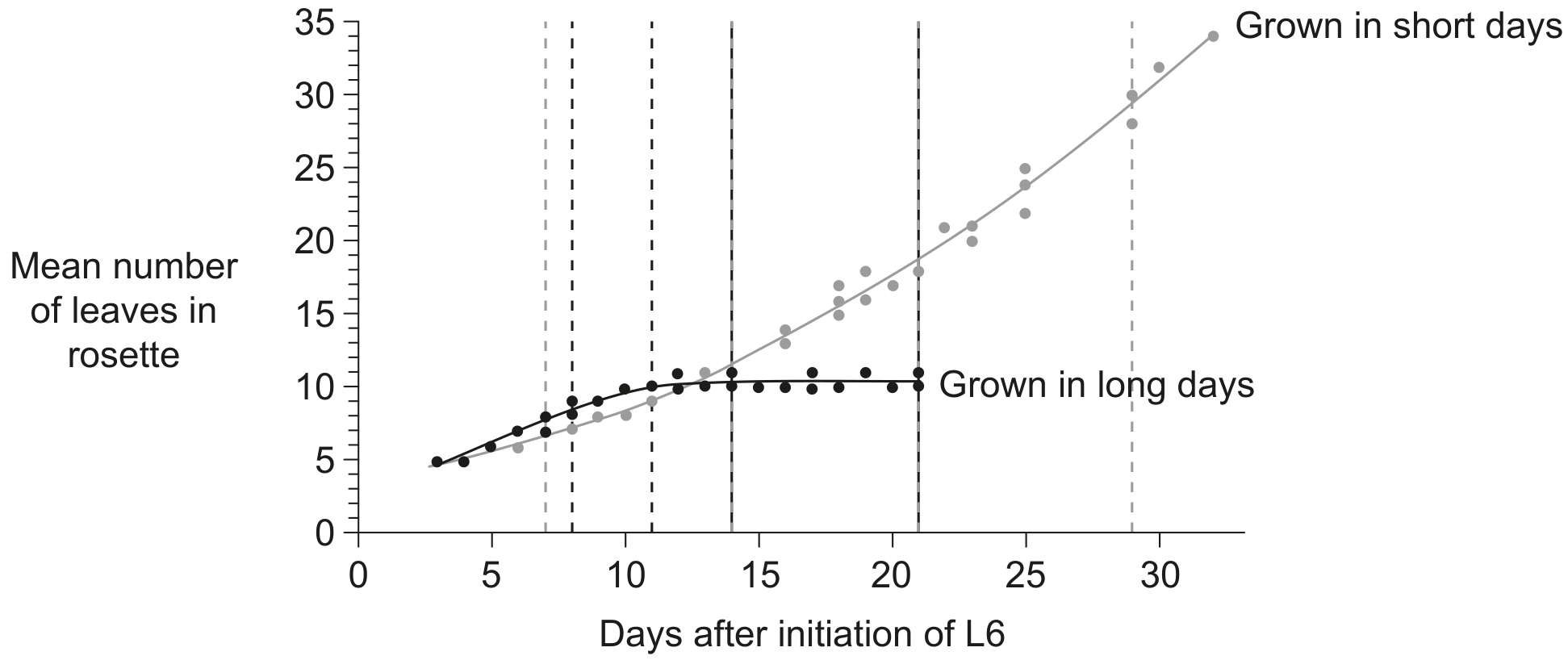
A study was carried out of differences in development between Arabidopsis plants grown in long days ( 16 hours light, 8 hours dark) or short days ( 8 hours light, 16 hours dark). The sixth leaf (L6) to emerge in the rosette of each plant was used in all investigations.

New leaves are initiated by the meristem and go through four stages as they develop.
- Stage 1 (S1) - rapid cell division
- Stage 2 (S2) - cell division has ceased, cell expansion continues
- Stage 3 (S3) - decreasing cell expansion rate
- Stage 4 (S4) - leaf growth complete

The start of each stage of leaf development for plants grown in long days and short days is shown above the first graph.

Question image
Question image
[Maximum number: 12]

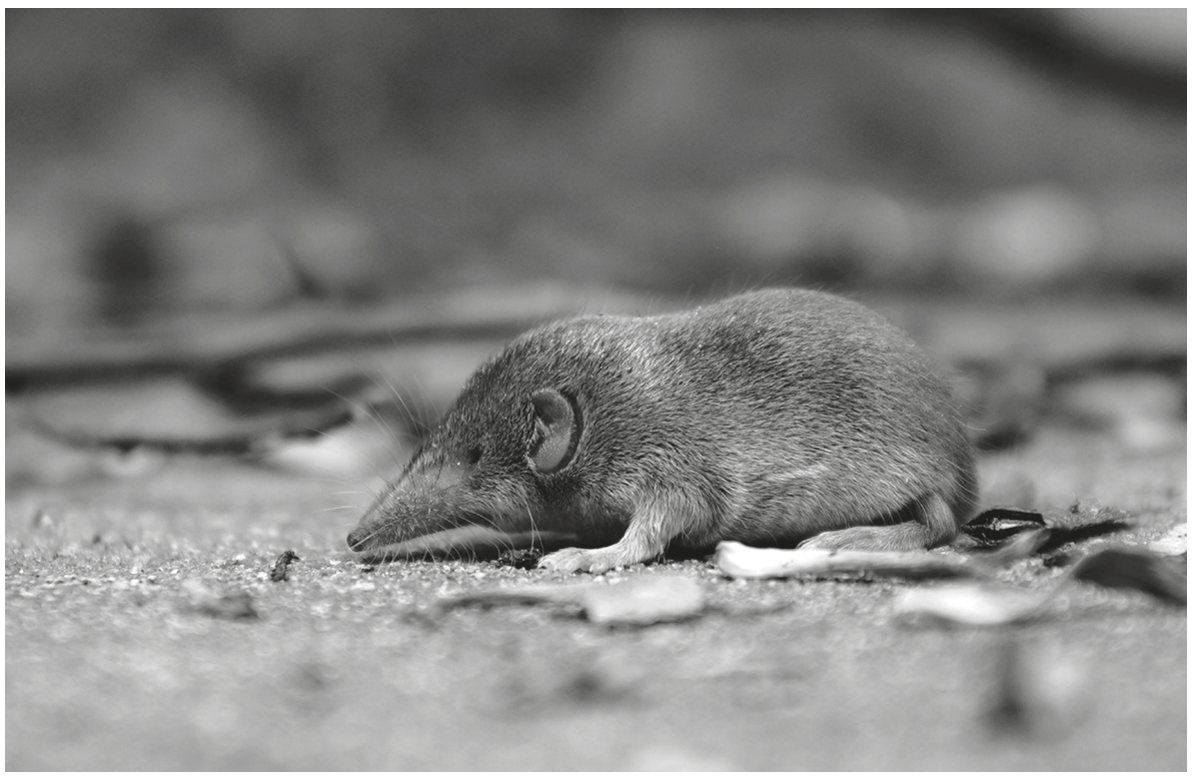
Common shrews (Sorex araneus) are small mammals found in Northern Europe. Their diet includes insects, slugs, spiders, worms and amphibians. They do not hibernate in winter because their bodies are too small to store sufficient fat reserves.

Question image

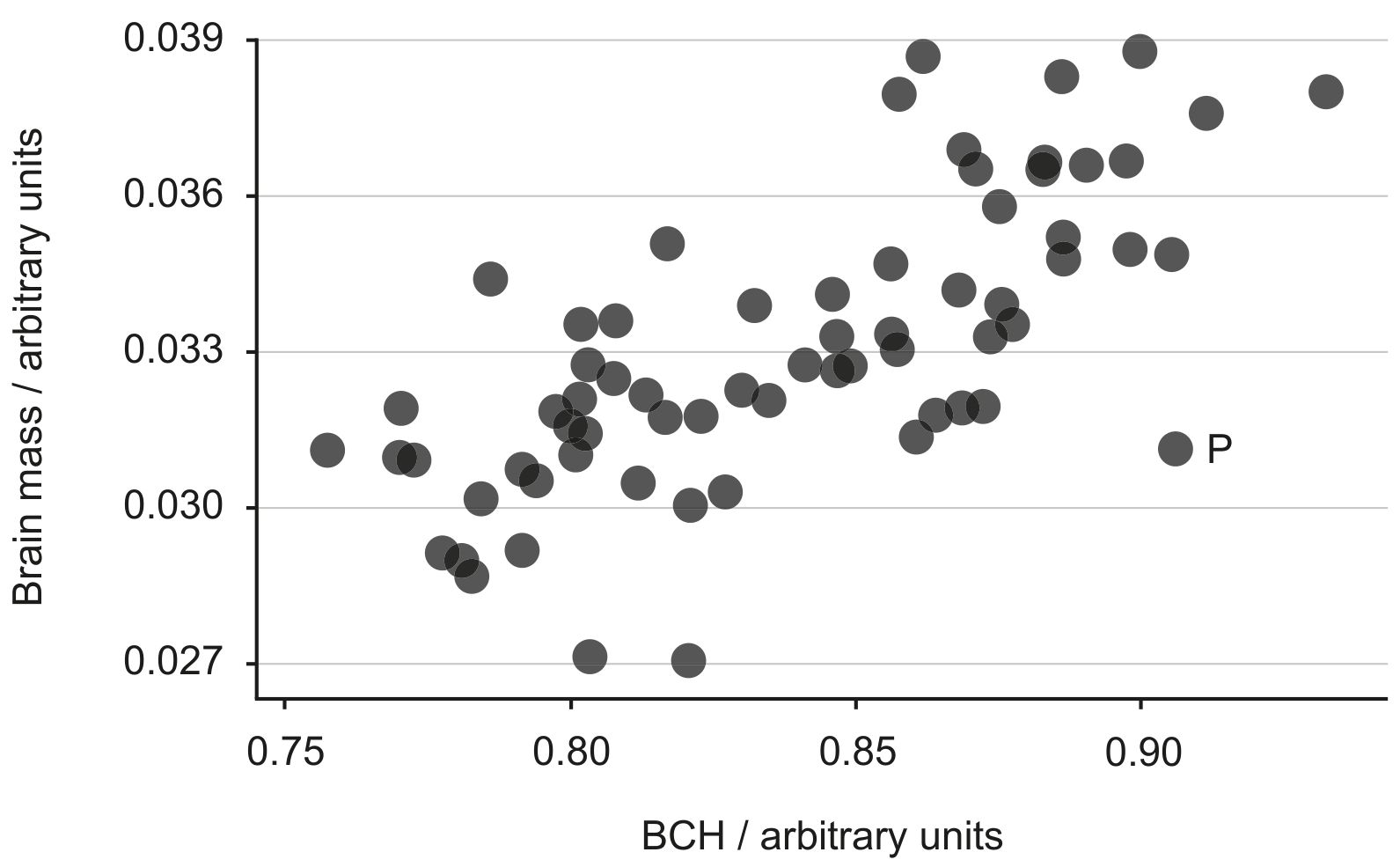
To study brain size in shrews, researchers anesthetize them, X-ray their skulls and measure the height of the braincase (BCH) where the brain is located. The graph shows the relationship between BCH and the brain mass of individual adult shrews.

Question image
[Maximum number: 1]

Which method provides biochemical evidence that cells have begun to differentiate?

A

Observation with a light microscope

B

Observation with an electron microscope

C

Examination of the DNA sequence

D

Analysis of the proteins

[Maximum number: 1]

How can cells in a multicellular organism differentiate?

A

They express some of their genes but not others.

B

They all have a different genetic composition.

C

Different cells contain a different set of chromosomes.

D

Different cells do not have some of the genes.

[Maximum number: 1]

What causes cells to differentiate?

A

Sufficient nutrition

B

Full expression of all genes

C

Specialized functions at different stages of embryo development

D

Expression of some genes with suppression of other genes

[Maximum number: 1]

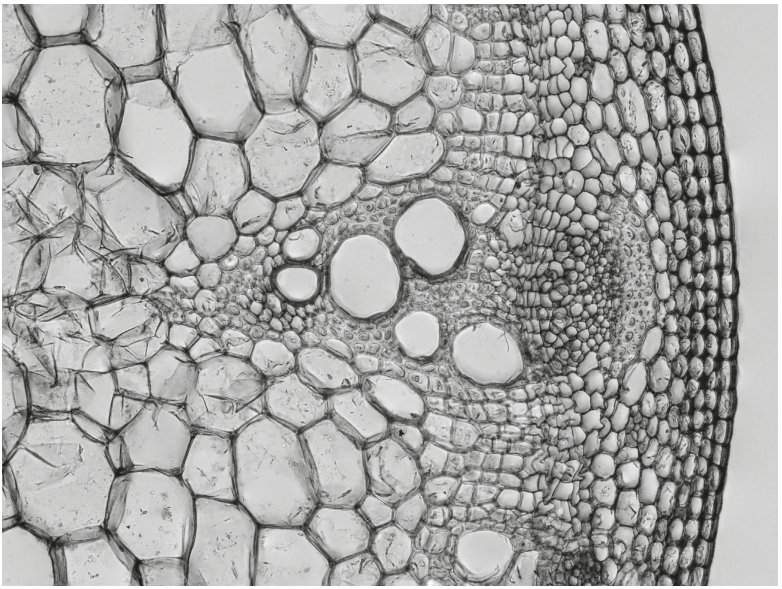
The micrograph of a section through a plant stem shows at least ten different types of cells.

Question image

What explains the differences between these cells?

A

Only one gene is expressed in each cell type.

B

Different genes are expressed in each cell type.

C

Only useful genes remain in the DNA of each cell type.

D

Changes in the DNA sequence take place when these cells develop.

[Maximum number: 1]

What results from an unspecialized cell experiencing gradients of signalling chemicals?

A

Cell differentiation

B

Meiosis

C

Saltatory conduction

D

DNA replication

[Maximum number: 1]

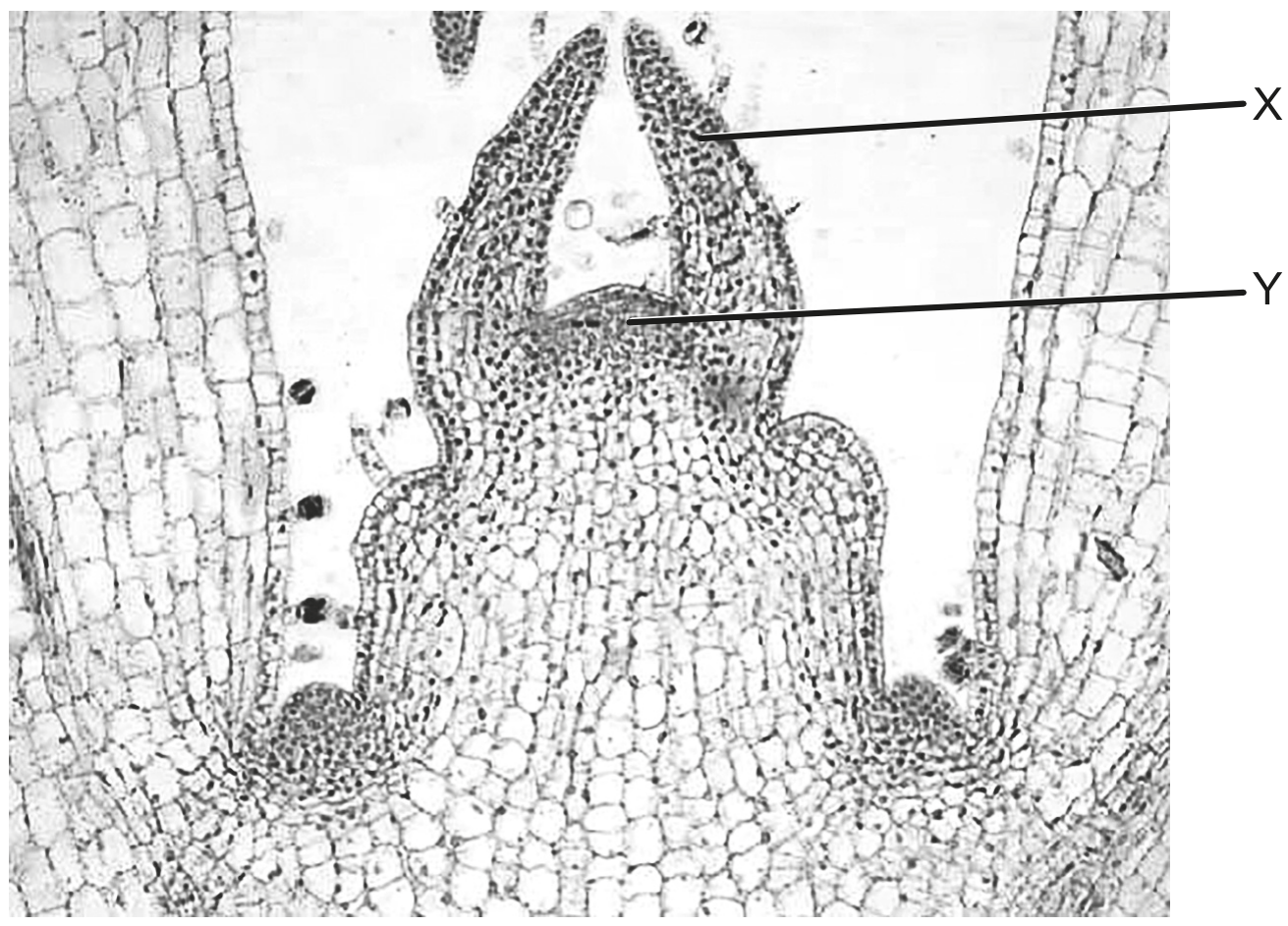
The photomicrograph shows a section through the top of a plant shoot.

Question image

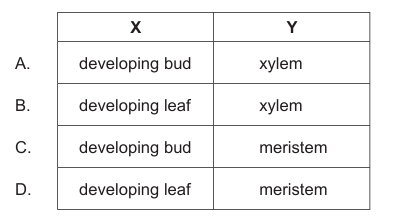
What are the structures labelled X and Y ?

Question image
0