Articles
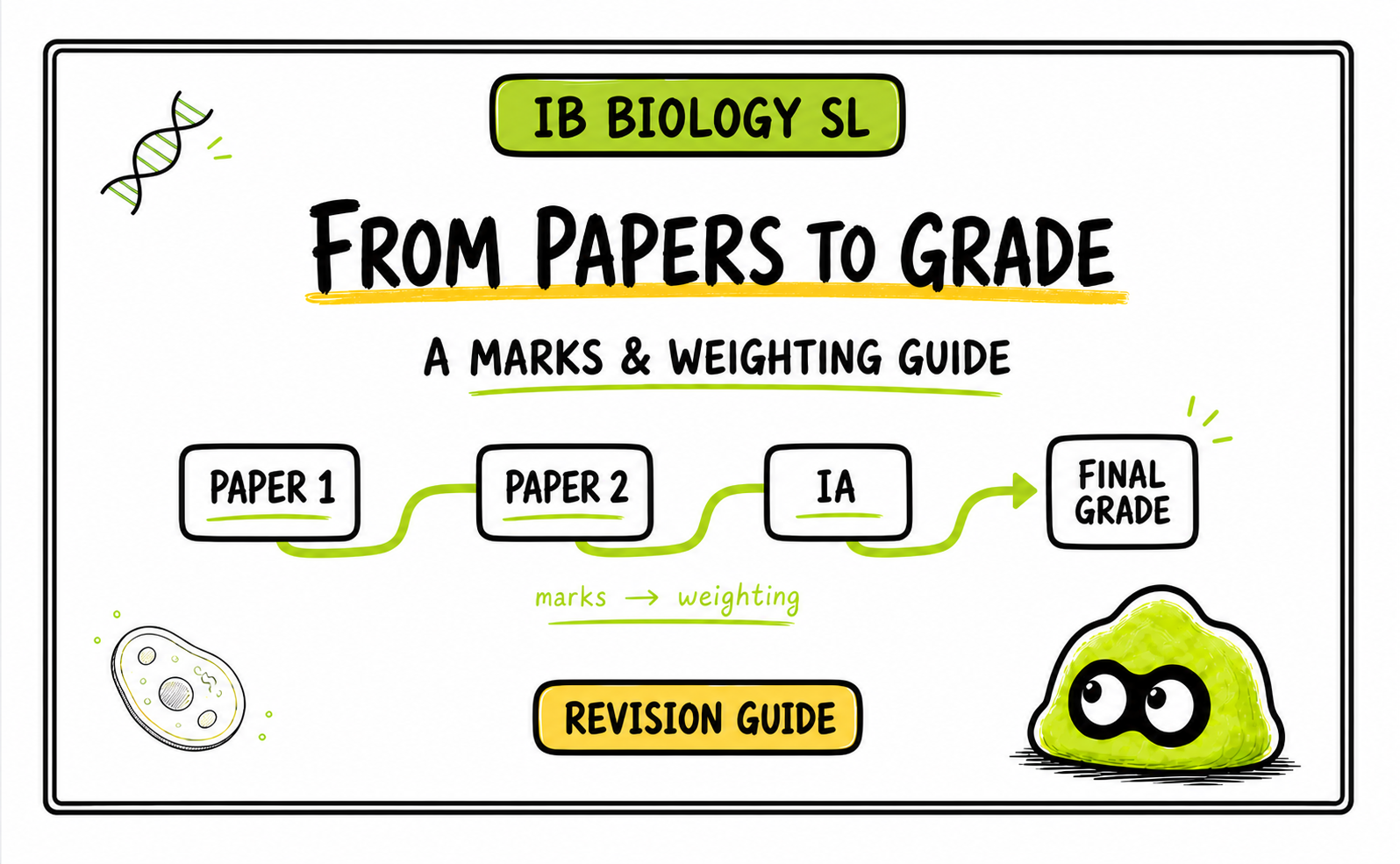
IB Biology SL Assessment and Grade Boundaries: How 55 + 50 + 24 Marks Become Your Final Grade
Learn how IB Biology SL Paper 1, Paper 2 and the scientific investigation combine through weighted assessment, how grade boundaries work and how to plan component-level revision.
Diploidy and Haploidy Explained
Revise diploid and haploid chromosome sets, meiosis, fertilisation and common IB Biology mistakes.
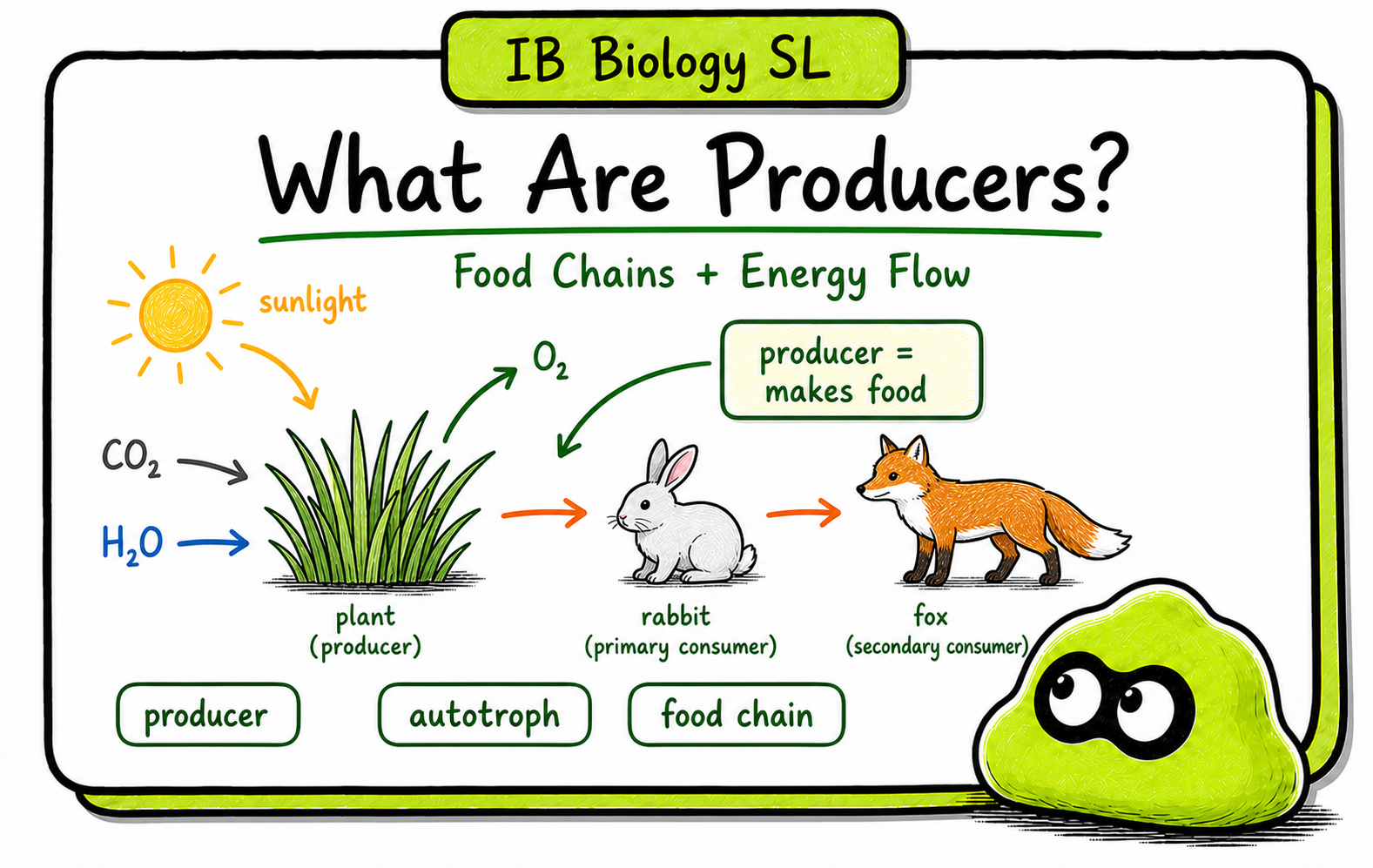
What Are Producers in an Ecosystem? IB Biology Guide
Learn what producers are in IB Biology ecosystems, how they start food chains, and how to use exam-safe trophic level wording.
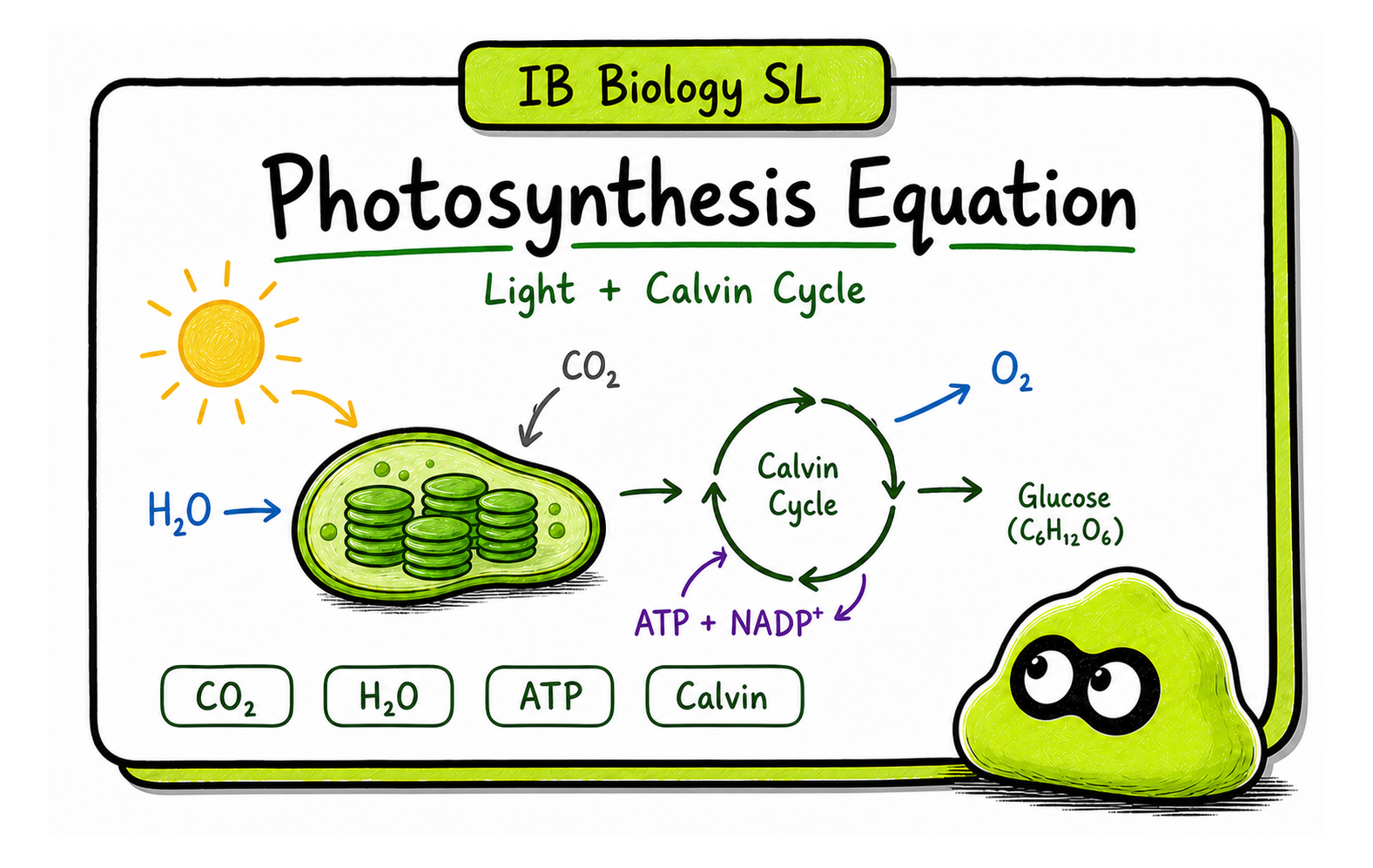
IB Biology Photosynthesis Equation: Calvin Cycle
Revise the photosynthesis equation in IB Biology with light-dependent reactions, carbon fixation, exam wording and practice questions.
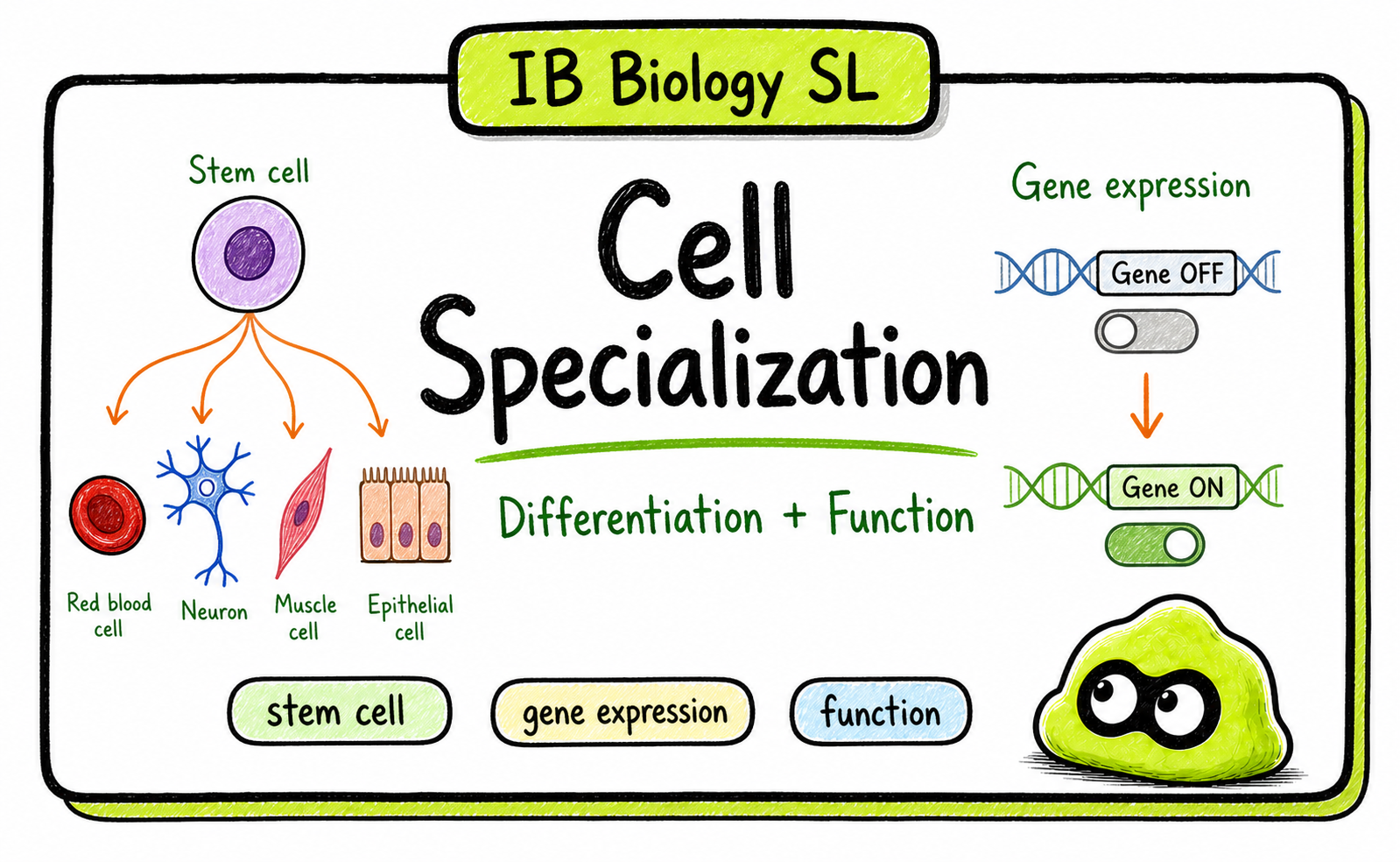
IB Biology Cell Specialization: Differentiation and Function
Revise IB Biology cell specialization with differentiation, gene expression, stem cells, structure-function links and practice questions.
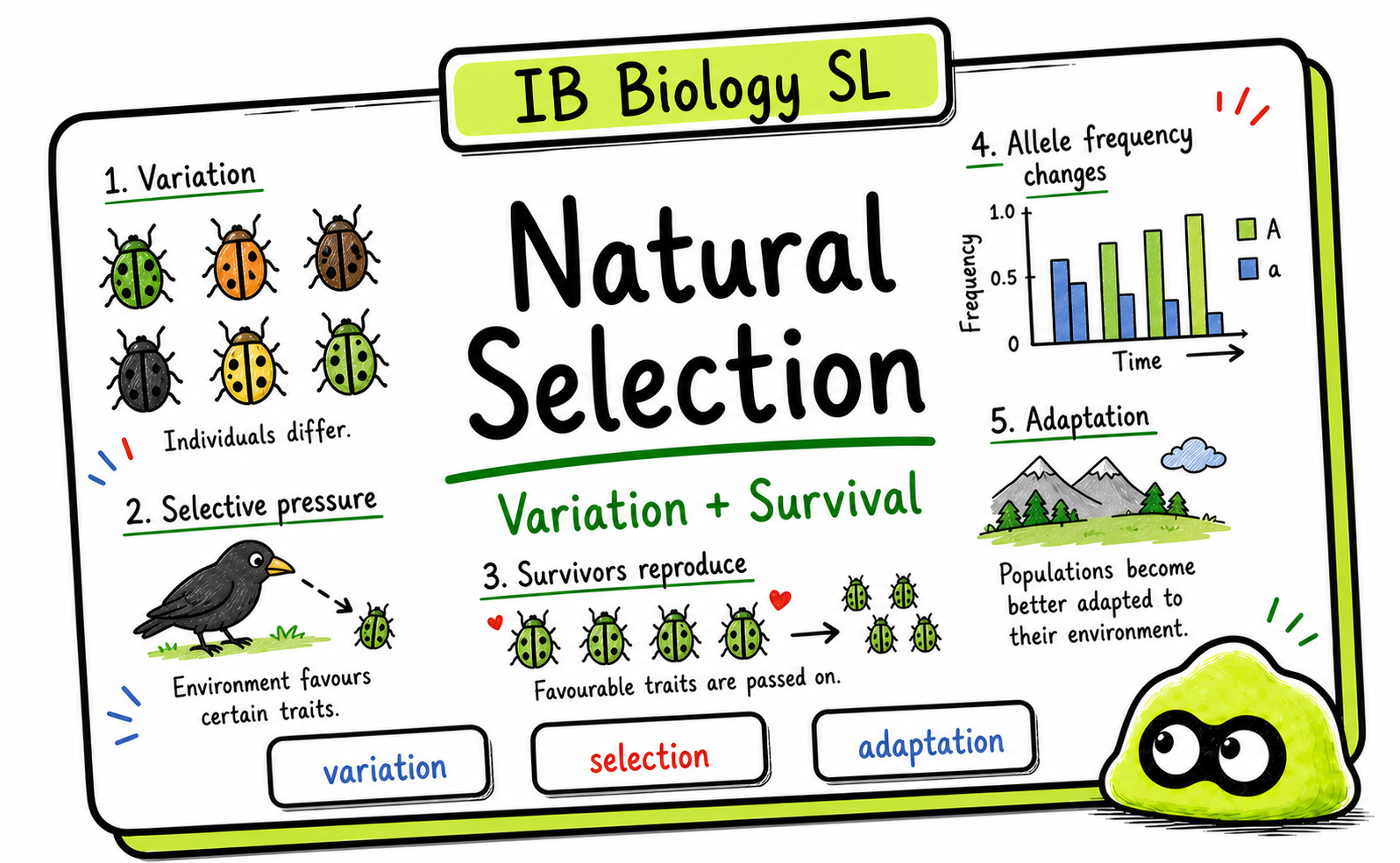
Natural Selection in IB Biology: Definition and Examples
Revise natural selection in IB Biology with definition wording, selection pressure, allele frequency change, worked examples and practice questions.
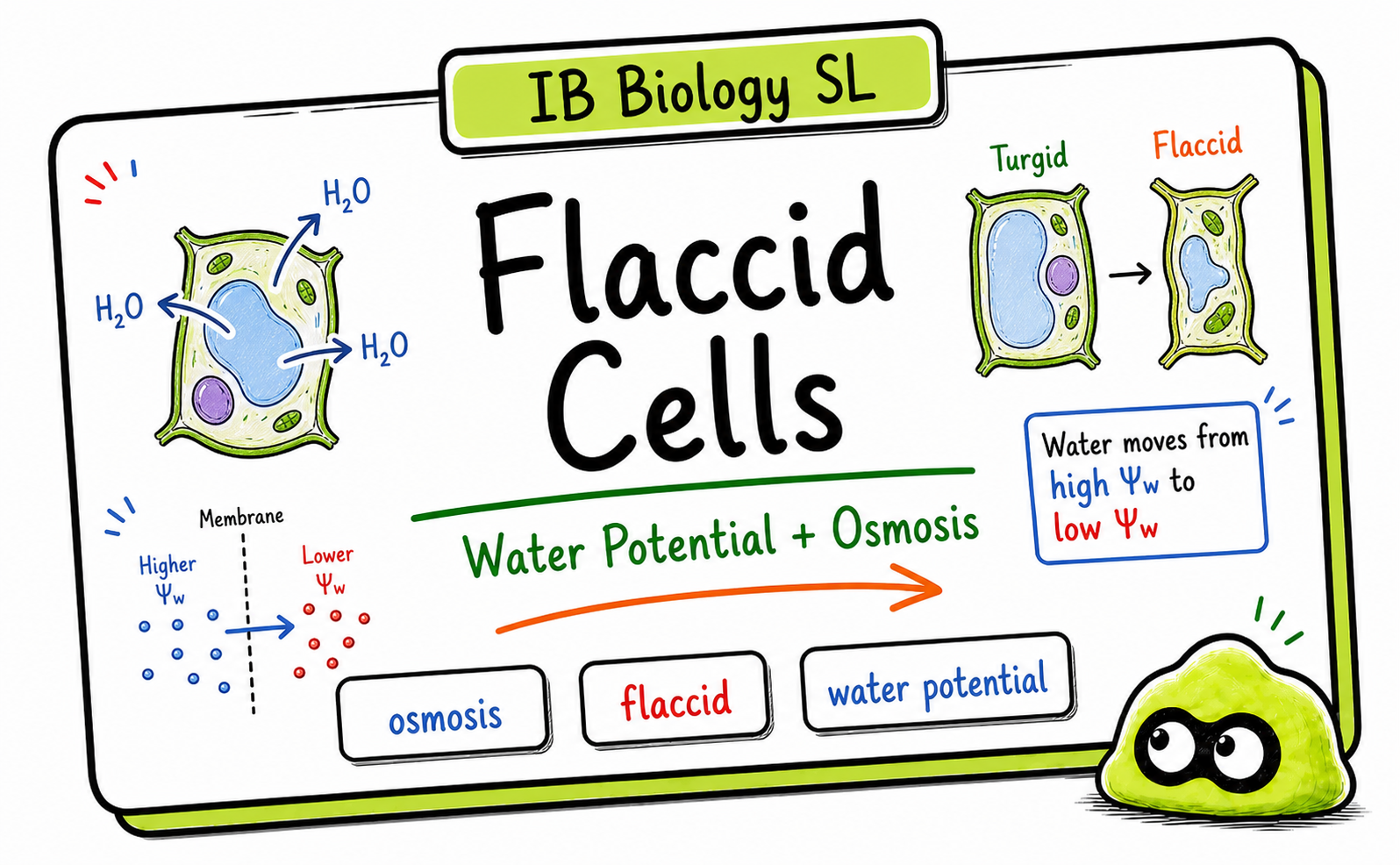
Flaccid Cells in IB Biology: Osmosis and Water Potential
Revise flaccid cells in IB Biology, including osmosis, water potential gradients, turgid comparisons and exam wording.
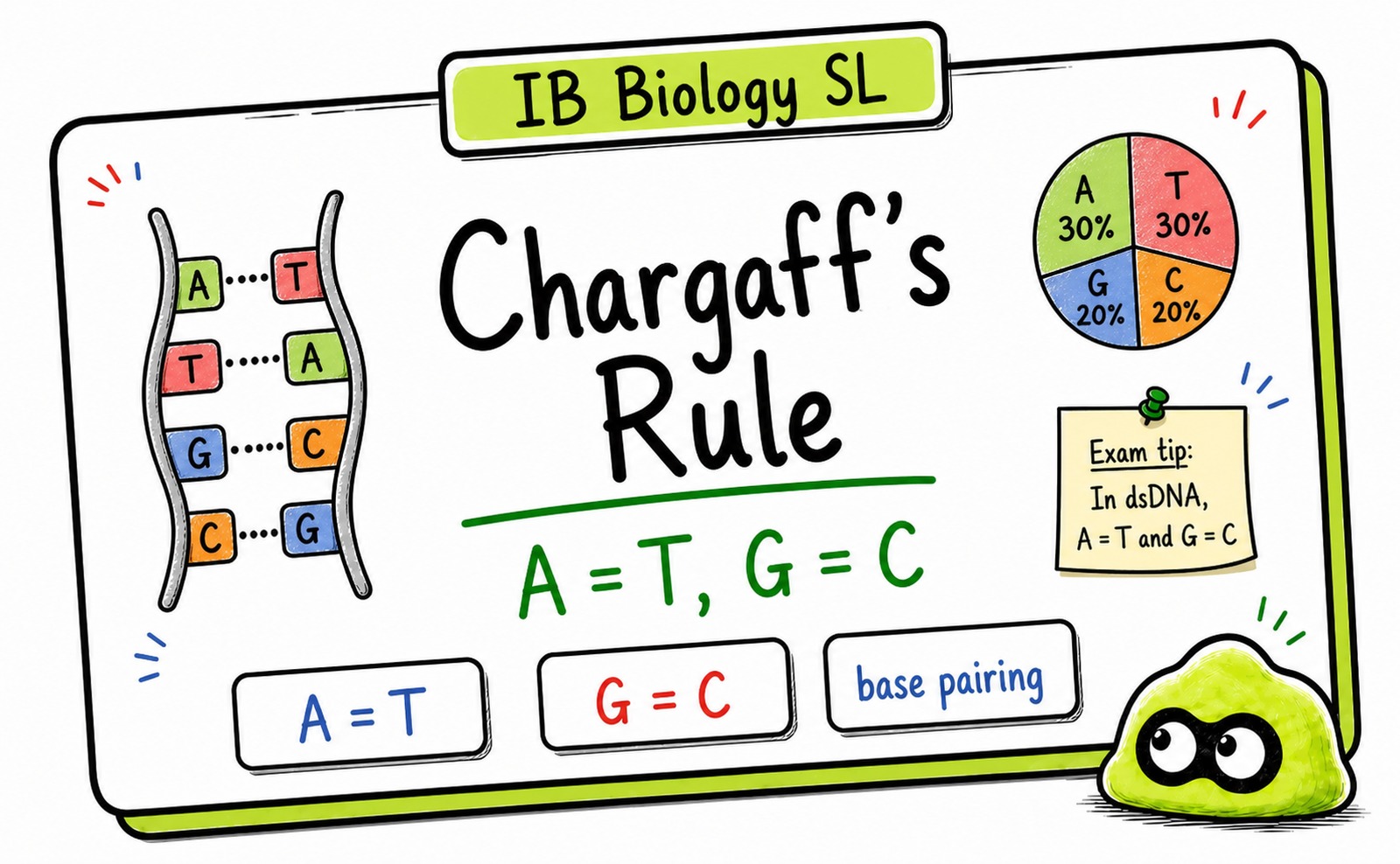
Chargaff's Rule in IB Biology: Base Pairing Practice
Revise Chargaff's rule, base pairing and DNA percentage calculations with worked examples and targeted IB Biology practice.
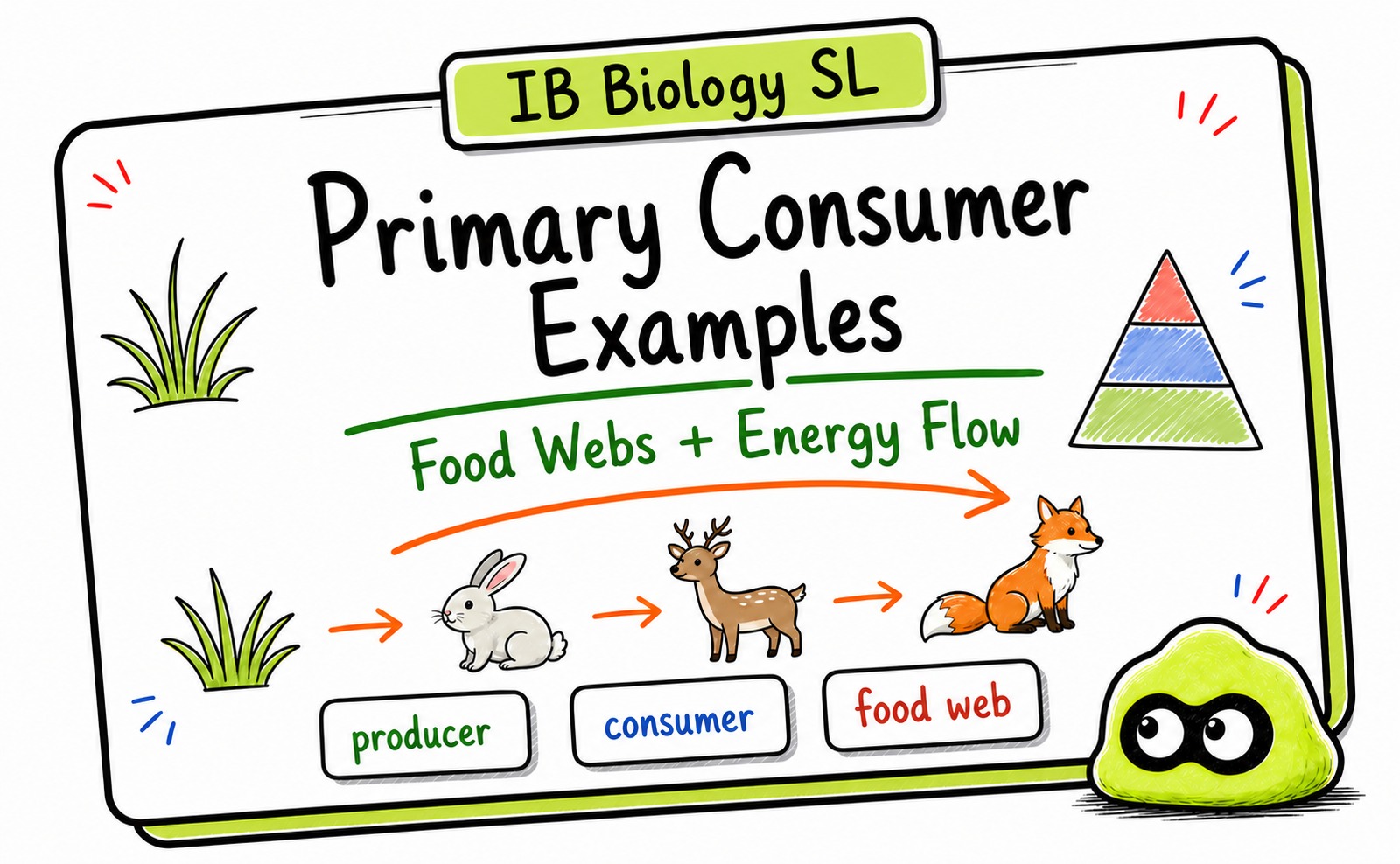
Primary Consumer Examples: IB Biology Ecology
Learn primary consumer examples, food-chain wording and common ecology mistakes before practising IB Biology populations questions.
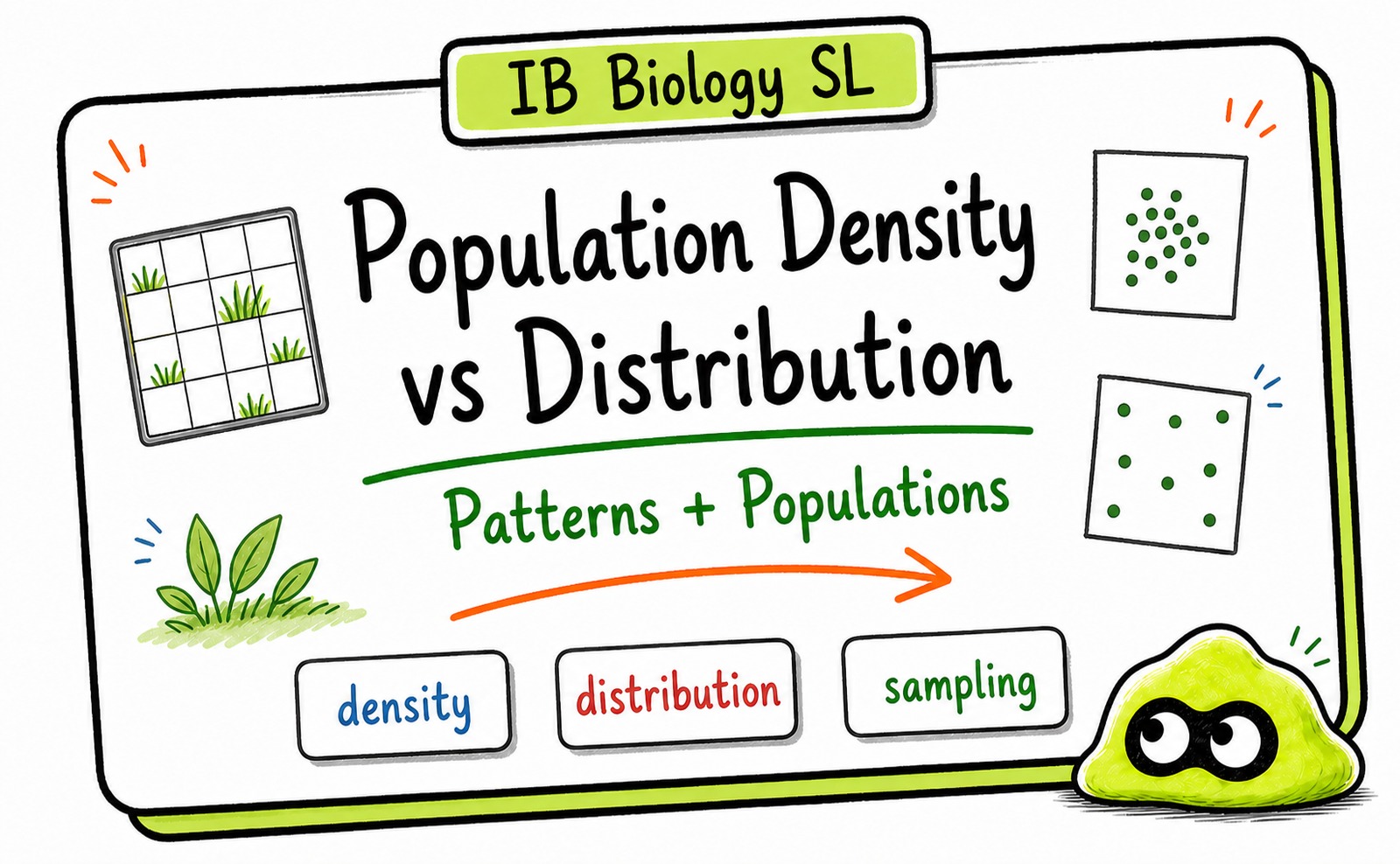
Population Density vs Population Distribution: IB Biology
Compare population density and population distribution in IB Biology, then practise with syllabus-linked ecology questions in the EduNinja Question Bank.
IB Biology IA Ideas: How to Choose a Feasible Topic
Choose an IB Biology IA topic you can investigate with the time, equipment and data you have. Compare eight directions and use a topic card to prepare for a conversation with your teacher.